8 Programmatic Display Examples Amazon Brands Use in 2026
Eight programmatic display examples from Amazon DSP campaigns, with targeting, creative, and performance breakdowns to help you spend smarter in 2026.

Your Sponsored Products campaigns are hitting efficiency targets, total revenue looks steady, and yet organic rank hasn't budged in months. Across Headline's 2025 portfolio, Sponsored Products account for 70% to 80% of typical brand ad spend, which is great for harvesting active search demand and terrible for creating new buyers once search volume plateaus. You don't need another lecture on why display exists; you need programmatic display examples that move organic rank, conversion rate, and contribution margin.
Automated buying is no longer a side experiment. An eMarketer worldwide programmatic forecast shows programmatic transactions climbed from 51.7% of global digital display budgets in 2014 to a projected 90.0% of worldwide digital display spending in 2026. The problem is that automation makes it just as easy to burn cash as to scale. According to the Association of National Advertisers' 2024 Programmatic Transparency Benchmark, only 44% of ad dollars spent on demand-side platforms effectively reached consumers in 2024, up from 36% in 2023.
Treating display like cheap wallpaper guarantees you'll fund ad tech middlemen instead of retail growth. Every tactic below is judged by what happens downstream on your Amazon listings and in your P&L, not by vanity impressions. Keep your messaging aligned across banners and product pages using this guide to consistent multi-channel product copy, then pick the campaign architecture that solves your biggest growth bottleneck.
1. Purchase-Path Retargeting for Browse Abandoners
Purchase-path retargeting uses Amazon DSP to re-engage shoppers who viewed your product detail page or category aisle without checking out, following them across Amazon properties and select open-web placements. Because these shoppers already raised their hands, you're shortening an existing buying cycle rather than manufacturing interest from scratch. That makes browse-abandon retargeting the sharpest first DSP test for most brands, provided your listing is ready to close the sale.
Retargeting connects a shopper's initial browse back to your detail page so warm demand doesn't leak to a rival listing.

Consider a mid-sized home goods brand running a 14-day browse-abandon audience with one clear, value-driven creative while suppressing recent purchasers. When shoppers return to a listing backed by strong reviews, competitive pricing, and a healthy conversion rate, those recovered orders boost sales velocity and lift organic keyword rank. The economics of separating lower-funnel intent from cold reach are clear in Amazon's ZLIKE DSP case study, where a $926 link-out campaign delivered 1,284,755 impressions at a $0.72 eCPM and achieved an average CPA of $0.06 for remarketing versus $0.11 for prospecting, more than 94% below the brand's $2 target.
Where Retargeting Quietly Fails
Retargeting breaks down fast when signal loss or sloppy exclusions inflate reported return on ad spend. Safari and Firefox block third-party cookies by default, and Apple's App Tracking Transparency restricts mobile tracking; as Publift's coverage of programmatic trends notes, first-party data became the primary privacy-oriented targeting approach for 40% of U.S. marketers in 2025. Even with Amazon's logged-in shopper data, retargeting can siphon budget by taking credit for customers who were already coming back to buy, or by sending traffic back to a detail page with a broken Buy Box.
- Enforce strict purchase suppression: Exclude anyone who bought the ASIN within your natural repurchase cycle so you don't pay to advertise to existing buyers.
- Match the lookback window to price: Use a 7-day to 14-day window for everyday consumables and up to 30 days for considered purchases like furniture or electronics.
- Mirror your winning listing assets: Reuse the exact hero image and primary value proposition from your product page so clicking the banner feels smooth and familiar. For foundational setup mechanics, review our breakdown of retargeting in digital marketing.
- Validate with a holdout before scaling: Split out an unexposed control group so you're measuring genuine lift rather than stealing credit from organic checkouts.
Guardrail for profit: Judge DSP retargeting by changes in listing conversion rate and organic rank, not by inflated view-through ROAS alone.
2. Competitive Conquesting on Rival Product Pages
Say a challenger skincare brand wants to steal share from three legacy vitamin C serums that dominate page one. Instead of buying broad beauty banners, the team builds an Amazon DSP conquesting campaign aimed exclusively at shoppers who viewed those three rival ASINs over the past two weeks. The creative calls out two concrete advantages the rivals can't match: a larger bottle size and transparent clinical ingredient percentages.
Competitive conquesting places your offer directly in front of shoppers actively comparing alternatives in your category.

This tactic attacks demand where it already exists, which is why sharp operators still rely on display even as generic banners lose favor. A Digiday research survey found that 62% of marketers used programmatic site-display advertising in Q1 2025, down from 77% in Q1 2024. Brands aren't abandoning display because visual ads stopped working; they're cutting unfocused awareness banners that never intersect with buying intent.
Connecting Conquesting to Organic Share
Conquesting only pays off when your detail page can beat the competitor's offer side by side. If a rival has far more reviews and a lower price per ounce, sending their shoppers to your listing will wreck your conversion rate and drag down your organic placement. Pair DSP conquesting with Sponsored Products bids on competitor brand terms under one unified budget logic, so shoppers see your alternative both on the rival's page and when they search again.
Monitor rival listings weekly because a sudden 20% coupon or Lightning Deal on their end can erase your conversion edge overnight. When your price, ratings, and differentiation hold up, stolen sales don't just add one-off revenue; they gradually push your ASIN upward in organic category rankings, lowering your blended acquisition cost over time.
Conquesting is a market-share weapon, not a band-aid for a weak offer. If your listing loses the head-to-head comparison, pause the ads and fix the product page first.
3. Lookalike Prospecting from Past Purchasers
A pet supplement brand launches a new joint-health flavor. Instead of feeding every one-time discounted buyer into the seed audience, the team builds its lookalike pool strictly from repeat Subscribe & Save customers who buy the highest-margin SKUs. That tells the algorithm to hunt for households likely to reorder, not bargain hunters chasing a single promo. Seed quality is the whole game here.
Retargeting and conquesting have a natural ceiling because they only harvest shoppers already inside your category funnel. Once your repeat customer base is stable and your purchase history is clean, lookalike prospecting lets Amazon DSP model new audiences that mirror the browsing and buying habits of your best existing shoppers across Amazon and the open web. Extending that prospecting beyond Amazon's own pages can pull in new-to-brand buyers rather than recycled demand, which is what makes this tactic a growth lever instead of a reshuffling of existing sales.
Judge the results the same way you judge everything else in this list: organic rank, conversion rate, and total profit. A prospecting audience that converts at half your retargeting rate can still be a win if those buyers turn into repeat purchasers who later search your brand terms and click your organic listings. Cheap CPMs mean nothing if the traffic never comes back.
How to Test Lookalikes Without Burning Margin
Lookalike prospecting fails without warning when advertisers start too broad or measure it against the same seven-day ROAS target used for branded search. Branded search captures demand that already exists, while prospecting builds demand that pays back over weeks. Treat expansion tiers as a controlled experiment so you protect total account profit.
- Seed with high-LTV buyers: Build models from repeat purchasers or high-margin SKUs instead of mixing in low-margin clearance orders. Clearance buyers teach the algorithm to find more clearance buyers.
- Expand in narrow tiers: Launch with the tightest similarity threshold first, and only widen reach once new-to-brand conversion rates stay within your allowable acquisition cost.
- Benchmark against a control audience: Run lookalikes head-to-head against a standard in-market segment before shifting meaningful budget into expansion. If the lookalike cannot beat a generic in-market pool, your seed is weak.
- Watch total brand demand: Track whether new-to-brand buyers lift repeat purchase velocity and organic keyword impressions over a 60-day to 90-day horizon.
The trade-off is patience. Tight seeds reach fewer households, so volume looks disappointing in week one while the economics compound in month two. Kill a tier when acquisition cost stays above your threshold after a fair test window, not because the dashboard looks slow compared to retargeting.
4. Fire TV and Connected TV Launch Campaign
Launching a new product on Amazon with Sponsored Products alone is slow because nobody searches for a brand or form factor they don't know exists. A Fire TV and connected TV (CTV) launch campaign puts non-skippable video directly onto living-room screens where households pay attention, creating top-of-funnel demand that feeds directly into Amazon search.
Streaming television has become a primary growth engine for automated display and video buying. An eMarketer US programmatic display forecast projected US programmatic digital display spending would climb 13.3% in 2025 to reach $178.25 billion, fueled in part by free ad-supported streaming television services and ad-supported video-on-demand tiers.
Living-room video reaches households during lean-back viewing hours, planting product recall before shoppers pick up their phones to search.
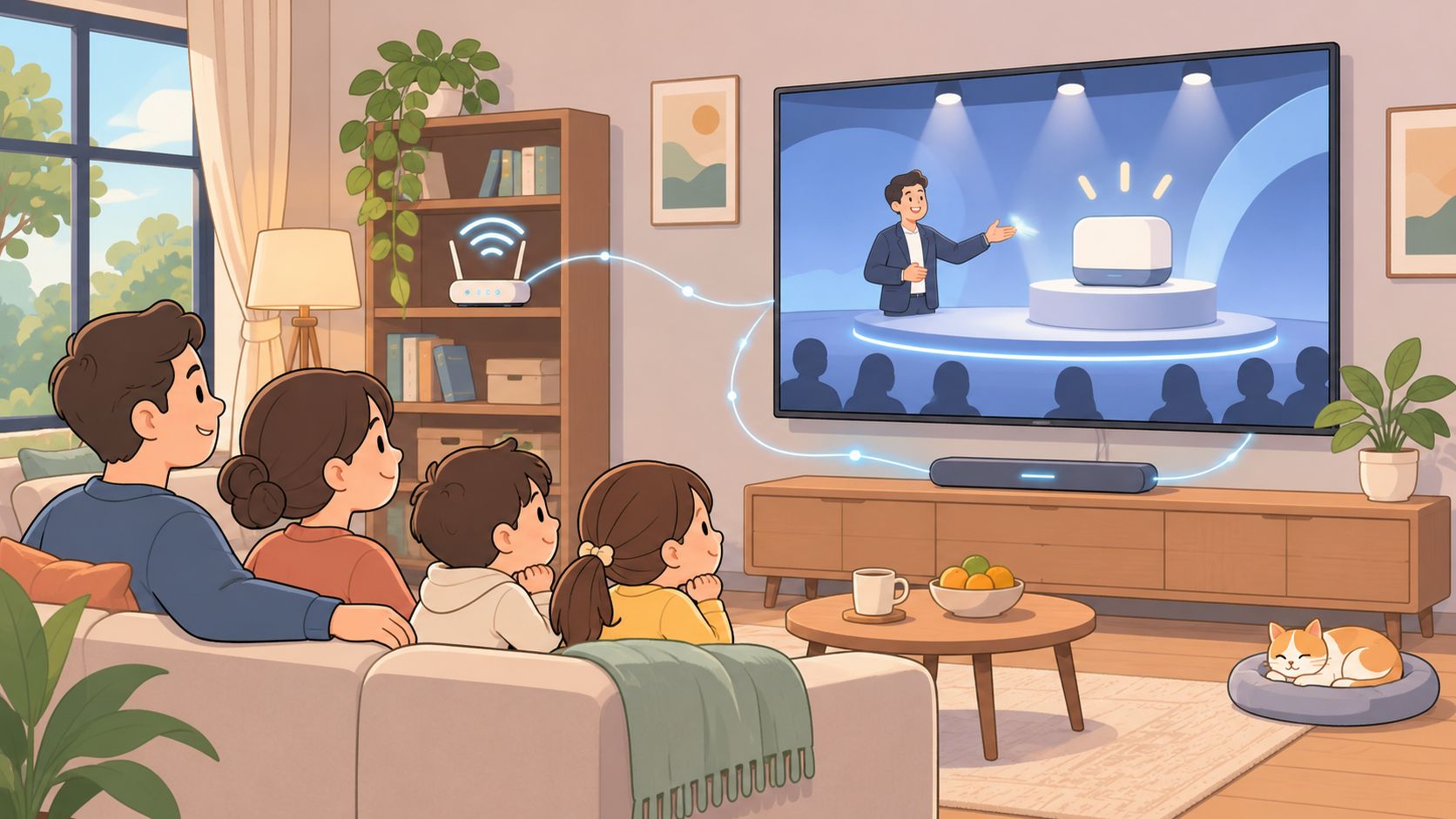
Consider a kitchen appliance brand rolling out a compact countertop espresso maker. The team runs a six-week Fire TV and CTV launch flight targeted to in-market kitchen and coffee households, while simultaneously raising Sponsored Products budgets on both branded terms and non-branded category queries. CTV sparks curiosity on the couch; Sponsored Products and an optimized detail page capture the purchase when the shopper searches on mobile twenty minutes later.
Planning the Search Handoff Before Media Goes Live
Connected TV campaigns rarely fail because nobody watched the commercial. They fail because the brand turned on video before fixing retail readiness or defending branded search, handing freshly created demand straight to competitors bidding on their brand name.
Lock in your listing copy, A+ content, inventory depth, and Sponsored Products brand defense at least a week before the first CTV impression serves. Judge the flight by leading indicators like branded search volume and product detail-page sessions, then use Amazon Marketing Cloud to trace how living-room exposure converts into downstream search clicks and orders.
5. Amazon Marketing Cloud Measurement of Halo Effects
This example isn't a standalone ad format; it's the measurement architecture that keeps good DSP programs from getting cut by finance. Standard ad dashboards rely heavily on last-click or single-channel attribution, which chronically undervalues display and over-credits branded search. Using Amazon Marketing Cloud (AMC), a privacy-safe clean room, lets you quantify how display impressions lift Sponsored Products conversion rates, branded search queries, and organic purchases across the entire path to checkout.
Connecting clean-room insights directly to media optimization produces measurable P&L gains. In an Amazon Marketing Cloud telecom case study, an AMC-driven strategy delivered a 40% reduction in cost per action compared with business-as-usual media and was associated with 30% year-over-year incremental brand growth. As Kinetic319's analysis of programmatic trends highlights, most brands still stop at CTR or attributed ROAS, leaving executives unable to tell whether display drove incremental profit or merely took credit for sales that would have happened anyway.
Suppose a household cleaning brand suspects its display spend is underperforming based on last-touch ROAS. Instead of killing the campaign, the team runs an AMC holdout experiment comparing exposed shoppers against an unexposed control group. The test reveals that shoppers exposed to display convert on Sponsored Products at a significantly higher rate and search the brand name more often, proving the campaign generates incremental contribution margin even when direct display ROAS looks modest.
Building an AMC Test Finance Will Trust
If you run video alongside display in your mix, Busylike's Amazon DSP video breakdown provides helpful context on how streaming placements interact with lower-funnel touchpoints. Structure every clean-room study around a concrete budget decision before writing a single SQL query.
- Write one business hypothesis first: Decide upfront whether you're testing lift in organic rank, Sponsored Products conversion rate, or new-to-brand orders.
- Isolate a true control group: Use audience splits or geographic holdouts so you measure incremental sales rather than platform-attributed overlap.
- Translate lift into contribution margin: Present finance with incremental profit dollars after COGS, Amazon referral fees, and FBA fulfillment costs, not just blended ROAS.
Clean-room reality: A DSP campaign with lower direct ROAS can still be your most profitable growth lever if it drives incremental new-to-brand buyers and strengthens organic velocity.
6. Prime Video Ads Brand Awareness Campaign
Most display inventory fights for peripheral attention next to cluttered articles, which is why buyers are moving aggressively toward curated environments. According to an EMARKETER ad tech forecast, more than four in five programmatic display ad dollars in 2025 were forecast to transact through programmatic direct and private marketplaces, excluding social networks. Placing video ads inside Prime Video puts your brand in premium streaming content tied directly to Amazon's logged-in shopper ecosystem.
When upper-funnel Amazon inventory triggers real brand demand, the impact shows up across both paid efficiency and organic queries. In Amazon's Nordic Naturals live sports case study, the brand's branded search rate reached 3.9x display benchmarks, beating a 1.5x goal, while CPM dropped 16% year over year despite a 30% budget increase. Better yet, its new-to-brand detail-page-view rate improved 21% year over year and new-to-brand ROAS jumped 87%.
Picture a premium outerwear brand launching a fall collection where fit, fabric texture, and visual storytelling drive purchase intent. The team runs a Prime Video awareness flight aimed at in-market outdoor apparel households, then pairs it with Sponsored Brands campaigns built around the exact collection name and hero visuals. Before committing production and media dollars, review how to advertise on Prime Video so your targeting and frequency caps match your seasonal window.
Capturing the Demand Prime Video Creates
Prime Video works best in categories where recall and differentiation matter before a shopper ever types a keyword. It stalls out when video creative looks completely disconnected from the Amazon Storefront or detail page that viewers land on afterward.
- Synchronize video and listing visuals: Feature the exact hero product, colorway, and brand tagline from your Amazon detail page so viewers recognize it immediately on search.
- Pair flights with Sponsored Brands: Reserve top-of-search Sponsored Brands placements for your branded and category terms to harvest the search lift created by streaming ads.
- Track leading and lagging KPIs together: Pair branded search lift and new-to-brand detail-page views with margin-adjusted sales before deciding whether to scale budget.
7. Category Interest Audience Expansion for New Product Entry
Launching an adjacent product line creates a cold-start problem: you don't have enough product detail-page visitors to retarget, and your existing buyers might not match the new category. Category interest audience expansion solves this by tapping Amazon's in-market and lifestyle segments to reach shoppers actively browsing your target aisle, even if they've never heard of your brand.
Say an established hydration brand expands into functional adaptogenic beverages. Because its current customer file skews toward endurance athletes rather than everyday wellness shoppers, the brand builds a narrow Amazon DSP prospecting campaign targeting in-market health and wellness beverage segments. The goal isn't instant first-order profitability; it's feeding qualified traffic into a fresh ASIN while early review generation programs build social proof.
Pairing audience signals with verifiable downstream conversion actions beats optimizing for cheap banner clicks every time. In The Trade Desk's Kraft Heinz Indonesia case study, a two-week open-internet display campaign combining first- and third-party data with proximity targeting generated 3,522 measured store visits, with 20.5% of visitors redeeming a voucher. That discipline pushed average CPA to IDR 29,940 (about US$1.95), 70% below benchmark, while proximity targeting cut CPA further to IDR 24,403 (about US$1.59).
Retail Readiness Rules Before Cold Expansion
On Amazon, cold category traffic will punish an unfinished listing immediately. If you send thousands of category-interest impressions to an ASIN with weak photography, thin bullet points, or zero reviews, shoppers bounce and Amazon's algorithm learns that your product doesn't convert.
Hold off on cold category DSP until your main image, secondary infographics, A+ content, and initial review base are live. Start with the narrowest high-intent sub-category segments rather than broad lifestyle buckets, then watch organic keyword rank on the new ASIN over the first 45 days. When organic sessions rise alongside paid impressions, expand into adjacent segments; if organic rank stays flat, fix conversion blockers on the page before spending another dollar.
8. Sequenced Funnel Campaign Combining DSP and Sponsored Products
Running display in one silo and Sponsored Products in another creates two expensive problems: your campaigns compete for the same shoppers, and nobody owns total profit. A sequenced full-funnel campaign coordinates Amazon DSP and Sponsored Products as one connected system, using display to introduce products and build consideration while search ads and optimized listings close the sale.
This coordinated layout keeps shoppers moving smoothly from first impression to checkout instead of letting channels bid against each other.
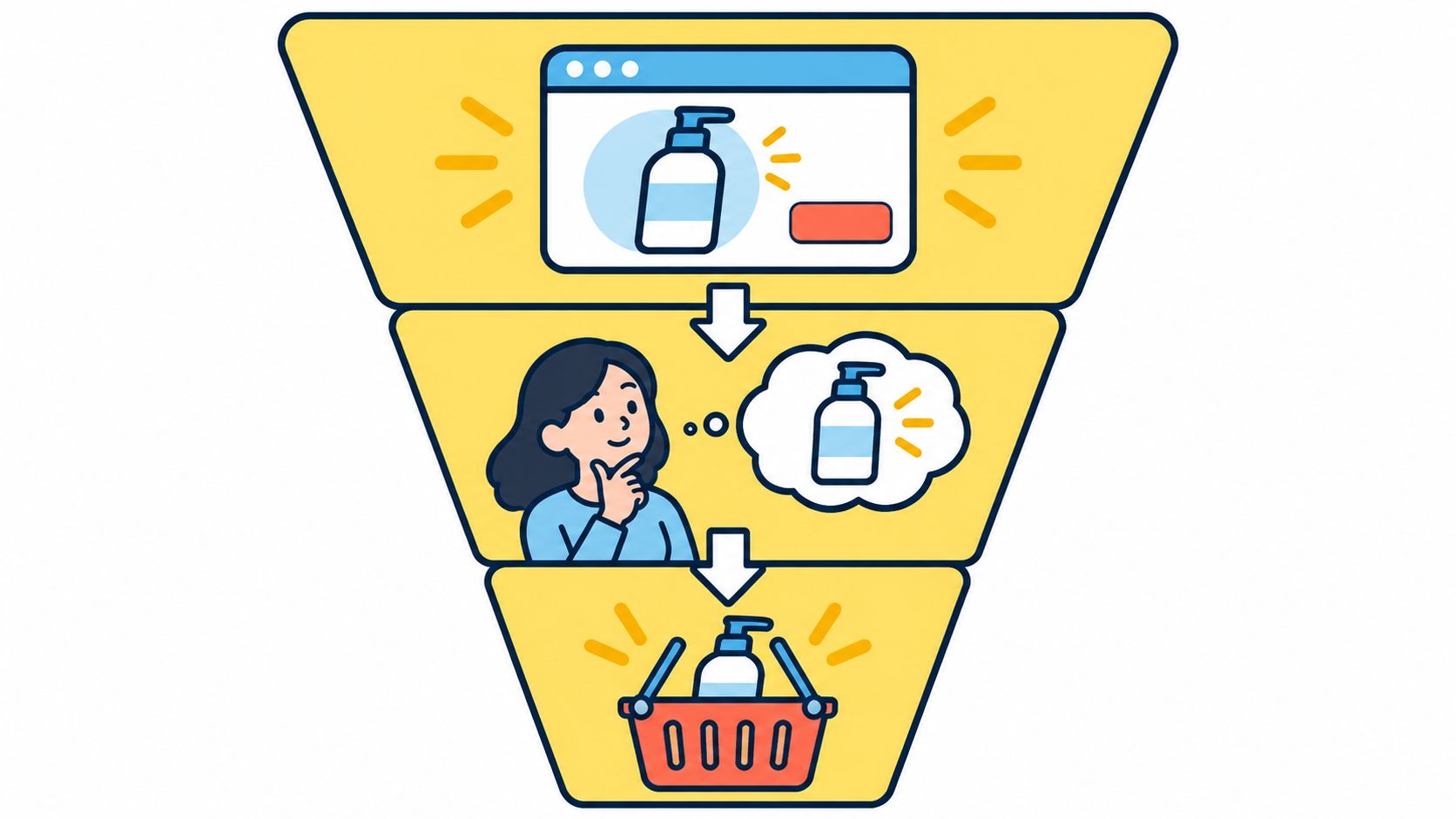
Cross-channel exposure compounds conversion performance far more than isolated tactics. In The Trade Desk's FreshDirect case study, adding programmatic display and online video exposure increased conversions by 388% among users who had also seen paid-search ads and by 274% among users who had also seen paid-social ads. The operational takeaway for Amazon sellers is clear: judge display as a cross-channel force multiplier that makes your Sponsored Products dollars work harder.
Consider a scaling pet care brand with strong margins on its hero dental chews. The brand runs Amazon DSP lookalike and category prospecting to introduce new pet owners to the product, moves detail-page visitors into a short DSP retargeting window with tight frequency caps, and bids aggressively on top-of-search Sponsored Products to capture the resulting branded and category queries. As combined sales velocity climbs, organic rank on core keywords improves, steadily reducing TACOS across the catalog.
Keeping Funnel Stages Aligned
A sequenced funnel falls apart when agency teams or internal managers optimize each campaign toward conflicting metrics. Build shared guardrails across PPC and DSP so every dollar serves total account profitability.
- Assign one job per stage: Measure upper-funnel DSP on new-to-brand reach and branded search lift, mid-funnel retargeting on detail-page recovery, and Sponsored Products on capturing high-intent conversions.
- Share audience exclusions across teams: Suppress recent buyers and overlap segments cleanly so prospecting budgets don't leak into remarketing impressions.
- Reallocate budget on a monthly cadence: Review blended contribution margin and organic rank movement every 30 days, shifting spend toward whichever stage lifts net profit rather than chasing the highest single-channel ROAS.
Don't treat Amazon DSP as a separate display budget. Treat it as the demand engine that lowers your long-term search costs and compounds organic visibility.
How the eight programmatic display examples compare
| Item | Funnel Stage | Audience Source | Primary Success Metric | Main Trade-off |
|---|---|---|---|---|
| Purchase-Path Retargeting for Browse Abandoners | Conversion | Product or category viewers who have not purchased | Incremental conversions and organic lift | Limited audience size; overexposure or sales cannibalization |
| Competitive Conquesting on Rival Product Pages | Consideration and conversion | Shoppers viewing competitor product pages | Market share growth and conversions | Competitive costs, claim restrictions, and list maintenance |
| Lookalike Prospecting from Past Purchasers | Prospecting | Shoppers similar to past purchasers | Profitable new-to-brand growth | Results depend on seed quality; niche reach may plateau |
| Fire TV and Connected TV Launch Campaign | Awareness | Households reached through connected TV and shopper signals | Branded search and product page visits | High media and production costs; complex attribution |
| Amazon Marketing Cloud Measurement of Halo Effects | Cross-funnel measurement | Exposed and control shopper groups | Incremental cross-channel sales and profit lift | Requires technical expertise and time to produce results |
| Prime Video Ads Brand Awareness Campaign | Awareness | Prime Video viewers matched using Amazon shopping signals | Branded search lift and new-to-brand sales | Premium media and production costs; delayed sales attribution |
| Category Interest Audience Expansion for New Product Entry | Prospecting | Category-interest, lifestyle, and in-market shoppers | Conversion and organic ranking growth | Broader targeting can mean lower conversion; listing must be strong |
| Sequenced Funnel Campaign Combining DSP and Sponsored Products | Full funnel | Audiences sequenced from awareness through conversion | Total profit and organic ranking lift | More complex planning, coordination, and attribution |
Turn Display Into Profit, Not Just Impressions
The strongest programmatic display examples all share three traits: every campaign has one explicit funnel job, audience exclusions protect against wasted impressions, and leadership evaluates performance by organic rank, conversion rate, and net profit instead of vanity display metrics. When display is detached from listing strength and Sponsored Products execution, it turns into an expensive impression machine. When it's wired into your retail fundamentals, it breaks through the search ceiling that traps mature Amazon brands.
Start by matching one campaign architecture to the exact constraint holding back your catalog right now:
- Leaking existing detail-page traffic: Launch 14-day purchase-path retargeting with strict buyer suppression and holdout testing before touching upper-funnel video.
- Stalled category share against entrenched rivals: Run competitive conquesting on top rival ASINs, paired with Sponsored Products on competitor brand terms, only after verifying your price and review proposition wins side by side.
- Maxed-out search demand on mature hero ASINs: Deploy lookalike prospecting seeded from repeat Subscribe & Save buyers, or layer in Fire TV and Prime Video flights backed by tight branded search defense.
- Finance skepticism about display ROI: Run an Amazon Marketing Cloud holdout test that translates halo effects into incremental revenue and contribution margin.
Before turning on a single impression, audit retail readiness across every advertised ASIN. Check main-image click appeal, Buy Box stability, inventory cover, A+ content, and review health. Programmatic media amplifies whatever sits on your product page; it will accelerate a high-converting listing up the organic rankings and expose a weak one twice as fast.
If you want a partner to connect these pieces without managing separate PPC and programmatic silos, Headline Marketing Agency offers Amazon PPC, Amazon DSP, Amazon AMC, and analytics services built around profitability, organic ranking, and full-funnel execution. Our DSP strategies combine custom audience modeling, creative testing, and AMC measurement across Amazon.com, Fire TV, Freevee, IMDb, Twitch, third-party websites, and mobile apps, going beyond basic ACOS to grow product margins and defend market position. You can request a custom DSP strategy or schedule a consultation to see which of these campaign models fits your catalog and margin structure.
Ready to turn programmatic display into measurable organic rank and bottom-line profit? Headline Marketing Agency builds integrated Amazon PPC, Amazon DSP, and Amazon Marketing Cloud strategies that connect upper-funnel reach directly to listing conversion rate and net margin. Visit Headline Marketing Agency to request a DSP strategy or schedule a consultation with our team.
Get Your Free Amazon PPC Audit
Discover untapped growth opportunities and see how our data-driven approach can improve your ROAS.
Get Free Audit →Ready to Transform Your Amazon PPC Performance?
Get a comprehensive audit of your Amazon PPC campaigns and discover untapped growth opportunities.