What Are Sponsored Ads and How Amazon Brands Use Them
What are sponsored ads? Learn the Amazon formats, how auctions price clicks, and how brands measure real profit from paid placements.

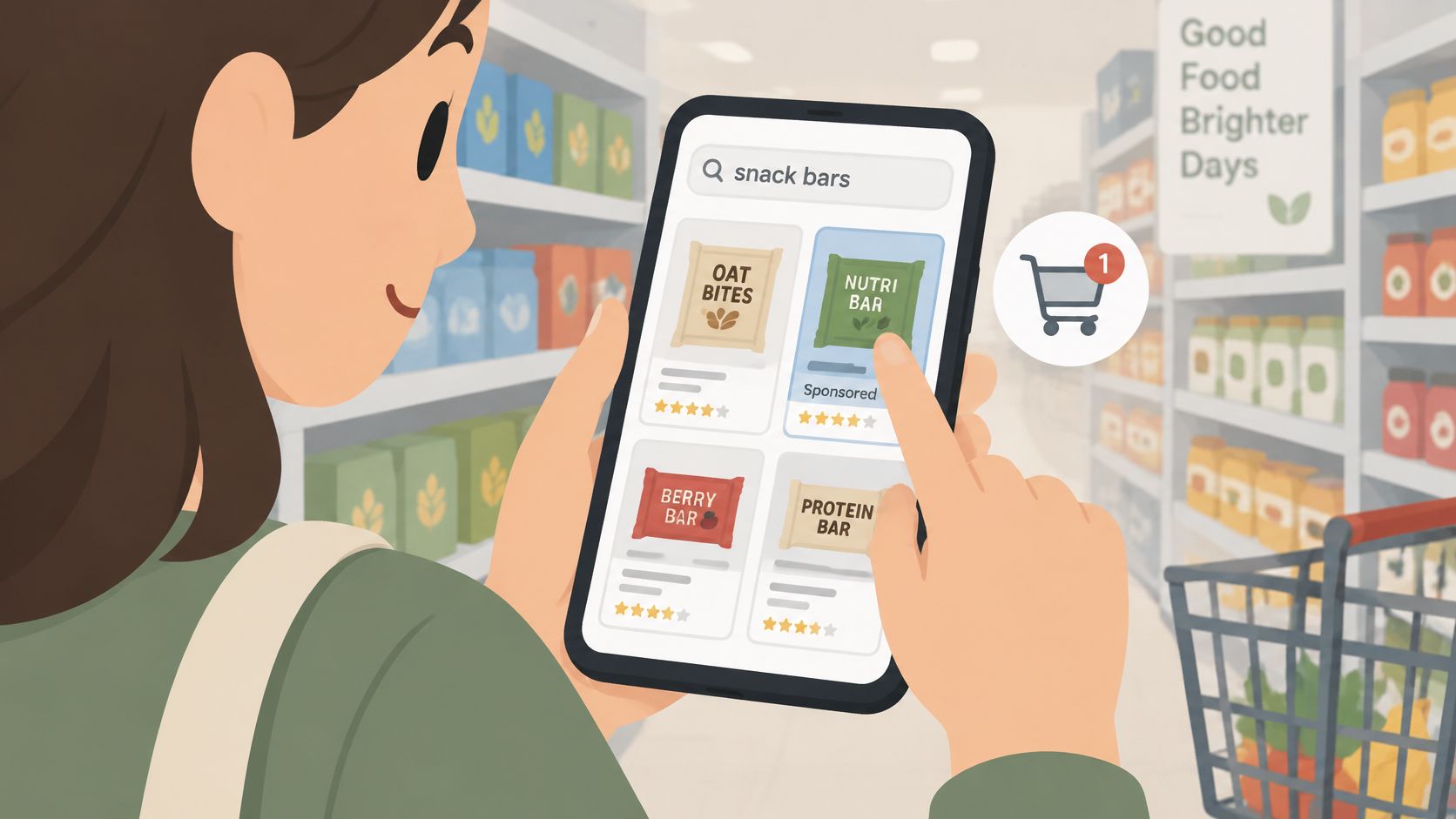
Sponsored ads are paid placements on Amazon that appear in search results and on product pages, are labeled “Sponsored,” and usually cost the advertiser only when a shopper clicks.
You search your own category and see competitors above your listing, beside it, and on its product page. Your team wants more visibility, but the harder question is whether buying that attention will create profitable sales or add another expense to orders you would've won anyway.
The useful answer to “what are sponsored ads?” goes beyond placement. For brand leaders, they're a controllable investment in demand capture, product discovery, and potentially stronger organic visibility, provided the economics hold up.
What Sponsored Ads Are and Why Shoppers See Them
A sponsored ad works like paid end-cap shelf space in a supermarket. The product sits in a prominent position alongside other products, but the brand has paid for that opportunity to be noticed. On Amazon, the “Sponsored” label distinguishes that commercial placement from unpaid search ranking.
Say a shopper searches for snack bars. A newer brand can buy an opportunity to appear alongside established listings instead of relying entirely on its existing organic position. The shopper still decides whether the flavor, price, ingredients, and reviews make the product worth considering.
Paid visibility isn't a recommendation
The placement tells shoppers that an advertiser paid for visibility. It doesn't establish that the product is the best option, the lowest-priced choice, or an independent recommendation from Amazon.
That distinction matters because sponsored listings resemble the shopping content around them. The Federal Trade Commission's native advertising guide says promotional content shouldn't suggest it's anything other than advertising, and disclosures should be clear, prominent, close to the ad, and easy to understand.
For a brand, the commercial opportunity is search intent. You're reaching someone already looking for a product or evaluating alternatives, rather than interrupting an unrelated activity. But attention isn't the same as persuasion: the listing still needs to answer the shopper's actual question.
Working definition: Sponsored ads buy an opportunity to compete for attention. They don't buy shopper confidence or guarantee an order.
Use that distinction with your team. Treat sponsored advertising as both a media purchase with financial consequences and a customer-facing communication that must earn trust.
Sponsored Ad Formats Compared at a Glance
Amazon sponsored ad formats compared
| Format | Where it appears | How you pay | Best used for |
|---|---|---|---|
| Sponsored Products | Search results and product detail pages | Cost per click | Driving sales for individual listings |
| Sponsored Brands | Top of search results with logo, headline and several products | Cost per click | Brand awareness and traffic to a store or product range |
| Sponsored Display | On and off Amazon, including product pages and websites | Cost per click or per thousand views | Retargeting shoppers and conquesting competitor listings |
| Amazon DSP | Amazon, third-party websites, apps and streaming video | Cost per thousand impressions | Reach and full-funnel awareness campaigns |
These formats solve different problems. Sponsored Products puts an individual listing in front of shoppers, while Sponsored Brands gives a brand more room to introduce its range. Sponsored Display supports audience re-engagement and competitive consideration, and Amazon DSP extends programmatic display and video across a broader set of environments.
DSP belongs in the comparison because leaders often evaluate it alongside sponsored advertising. It isn't another Sponsored Products campaign with different creative, so don't give it the same immediate-sales expectations by default.
Match the format to the shopper's next action
- Sponsored Products: Use it when the next action you want is a visit to a specific listing and a purchase.
- Sponsored Brands: Use it when shoppers need to understand your range or choose among related products.
- Sponsored Display: Use it when you need to reconnect with interested shoppers or present an alternative during product comparison.
- Amazon DSP: Use it when broader reach and coordinated awareness, consideration, and conversion activity justify impression-based buying.
A practical plan might start with Sponsored Products to capture existing demand, then add a format that addresses a different obstacle. A brand with strong listing conversion but weak recognition has a different need from a brand whose shoppers repeatedly browse without buying.
Our comparison of Sponsored Products versus Sponsored Brands helps clarify that particular allocation decision. The important question isn't which format is easiest to launch, but which shopper action your business needs next.
Avoid launching everything just to claim full-funnel coverage. Each format should have a defined role, suitable creative, and a success measure that matches its job.
How Sponsored Product Auctions Decide Who Wins
The campaign setup starts with a product, a target, and a spending limit. These are the core inputs you control.
The opening setup is straightforward:
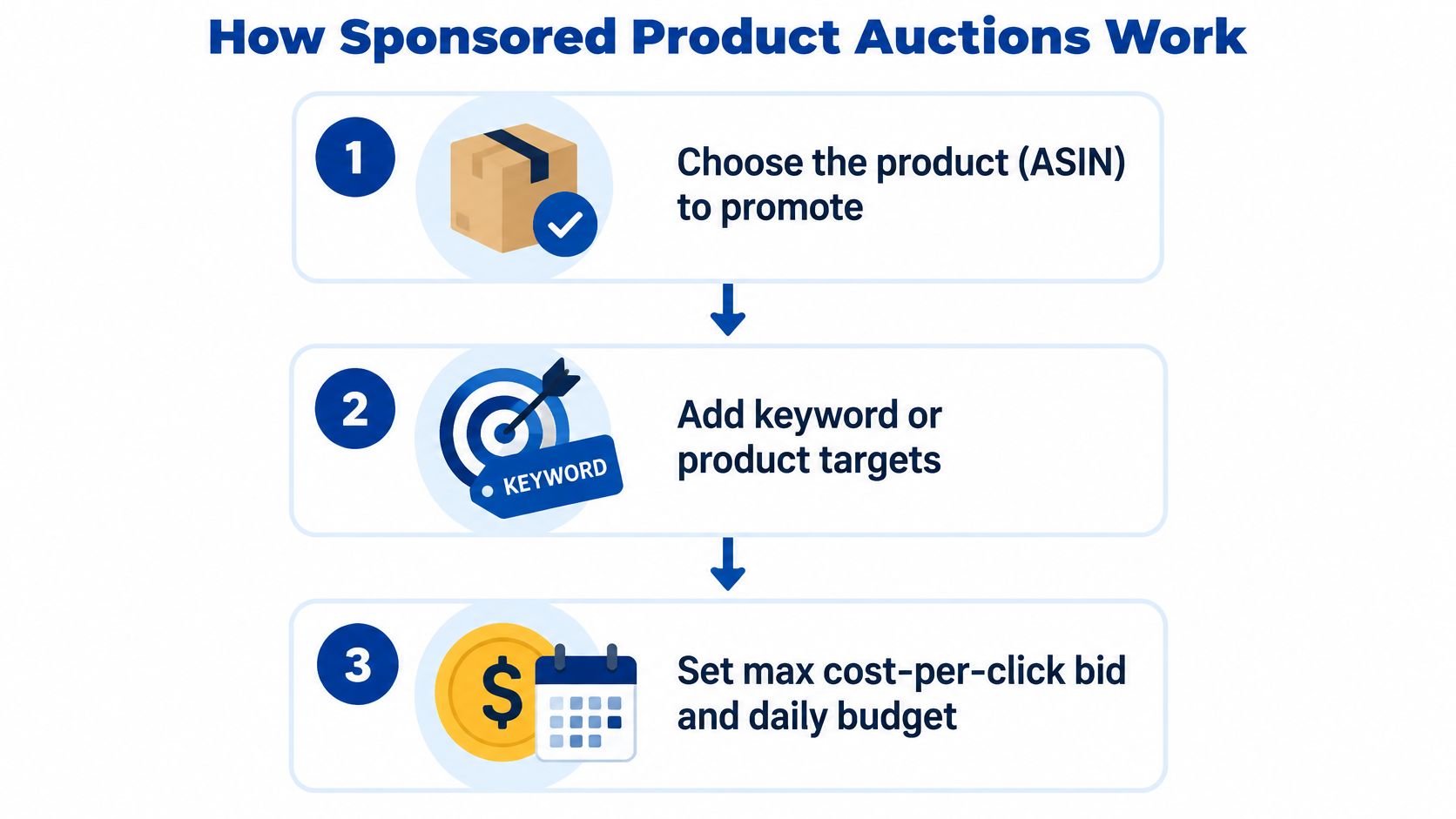
- Choose the product. Select the ASIN you want to promote, checking that its listing is ready to convert the traffic.
- Choose the targeting. Add keyword or product targets, or use automatic targeting to let Amazon identify relevant opportunities.
- Set your spending controls. Define a maximum cost-per-click bid and a daily campaign budget.
- Enter relevant auctions. When a shopper searches or browses an eligible context, Amazon matches available ads to relevant targets and runs an auction.
- Receive an impression if selected. Winning ads appear in the available placements; under CPC buying, that display alone doesn't incur a charge.
- Pay when a shopper clicks. The click creates a charge and uses part of the campaign budget.
Amazon's bidding documentation describes the auction-based CPC model for Sponsored Products and Sponsored Brands, including maximum bids and click charges. Don't interpret winning as just submitting the largest bid: eligibility and relevance matter to whether your ad can serve.
Broader targeting creates more discovery opportunities but can introduce poorly qualified traffic. Exact keywords and specific product targets provide tighter control; Amazon's targeting guidance also supports negative targeting to exclude inefficient traffic.
A cheap click can still produce an expensive order
Consider a hypothetical listing with a $1.00 CPC and a 10% conversion rate. Ten clicks cost $10 and produce one order on average. If that order generates $12 in contribution margin before advertising, only $2 remains after ads.
That's a narrow cushion, not an obvious scaling opportunity. A lower selling price, higher product costs, or weaker conversion could erase it.
Set bids against the most you can afford to pay per order, not against a click price that feels inexpensive.
Our guide to how to bid on Amazon develops that decision into a practical bidding approach. Review query and placement performance before increasing bids across an entire campaign.
For a visual walkthrough of the advertising mechanics, use this video:
How Brands Use Sponsored Ads to Grow Sales
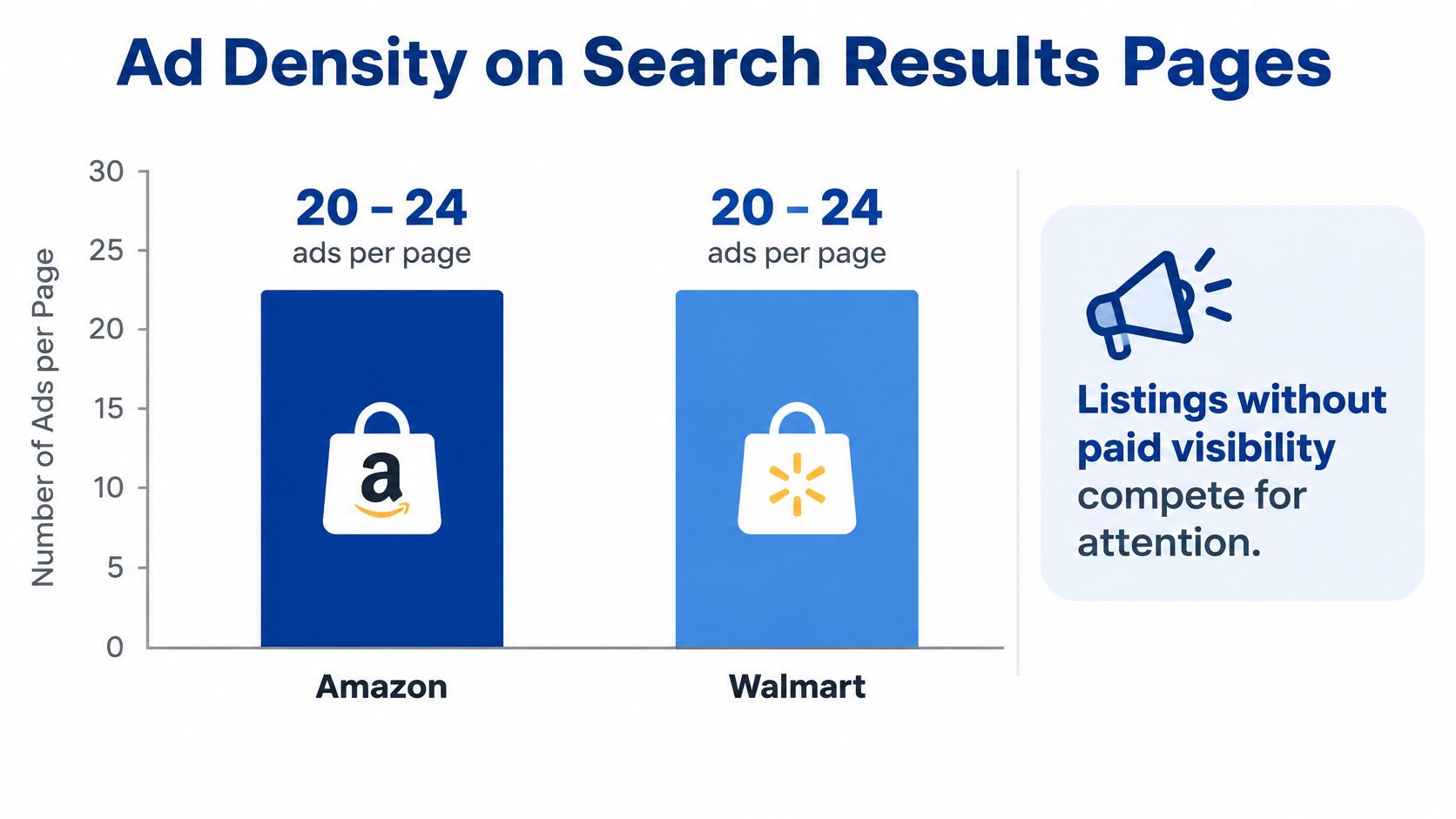
In 2025, shoppers encountered an average of 20 to 24 ads per page of search results on Walmart and Amazon, according to a Pentaleap analysis cited by eMarketer. An unpaid listing therefore competes for attention alongside substantial paid inventory.
Give each campaign a commercial job
Launch a new product. A snack brand introducing a new flavor can target relevant category searches to generate initial purchases and learn which queries convert. Those purchases may create opportunities for genuine reviews, but advertising doesn't purchase reviews or guarantee them.
Defend branded search. A shopper searching your brand name has already expressed a preference. A dedicated branded campaign lets you manage that traffic separately instead of allowing strong branded conversion to disguise weaker acquisition performance.
Compete on alternative products. Product targeting can place your offer in relevant comparison contexts. A premium storage-container brand, for example, should target substitutes where its material, capacity, or bundle offers a credible reason to switch.
Move proven queries into controlled campaigns. Use automatic targeting for discovery, then transfer validated search terms into manual campaigns with deliberate bids and budgets. Amazon's advertising FAQ describes Sponsored Products as keyword-targeted CPC advertising; separating discovery from proven demand makes that control more useful.
Connect paid sales to sustainable growth
At Headline, our point of view is that PPC should support organic growth and profitability, not just produce attributed revenue. Well-converting paid traffic can contribute to stronger organic visibility over time, but buying ads isn't a guaranteed ranking mechanism. Monitor whether unpaid visibility improves rather than assuming it will.
Efficiency and growth aren't necessarily opposites. Amazon's ACOS guide documents how Power Practical used Sponsored Products to reduce ACOS while increasing sales. A launch may justify temporarily weaker advertising efficiency, but only with a defined investment limit and a credible path to contribution profit or future customer value.
Market averages also need careful interpretation. In Q3 2025, Amazon Sponsored Products clicks increased 31% year over year, advertiser spending increased 15%, and average CPC declined 12%, according to Tinuiti's benchmark data summarized by Karooya. Those advertiser results aren't a forecast for your account.
Budget discipline: Name the campaign's job before deciding how much traffic to buy.
A launch campaign, brand-defense campaign, and competitor-targeting campaign shouldn't inherit identical bids or success criteria.
How to Measure Whether Sponsored Ads Actually Pay
Metrics that show whether sponsored ads pay
| Metric | How it is calculated | What it misses |
|---|---|---|
| ACOS | Ad spend divided by attributed ad sales | Product margin and organic lift |
| ROAS | Attributed ad sales divided by ad spend | Same blind spots as ACOS |
| Contribution margin after ads | Sales minus product cost, fees and ad spend | Needs accurate cost data for each product |
| Organic rank movement | Change in organic position for target keywords | Slow to read and needs a clear baseline |
ACOS and ROAS describe advertising efficiency, not complete business performance. They use attributed revenue, which isn't automatically revenue caused by advertising. Our explanation of what ACOS means helps teams use the ratio without confusing it with margin.
For Seller Central advertisers, Amazon's attribution documentation specifies a seven-day click lookback window and last-click attribution, and notes that conversions can take up to 12 hours to appear. Eligible purchases can include the advertised item and other products sold by the same merchant.
This means a shopper who would've bought organically can still generate an attributed sale after clicking an ad. Conversely, a purchase outside the applicable window won't appear as an attributed conversion. Reported ad sales are useful, but they aren't a causal estimate of incremental growth.
Put product economics beside campaign reporting
Consider hypothetical products with the same 20% ACOS. On a product with a 15% contribution margin before ads, that spend exceeds the available margin; on one with a 45% margin, there's room left after advertising. The advertising ratio is identical, but the financial result isn't.
Use product-level costs rather than a blended margin that hides differences between ASINs. Include relevant selling fees and fulfillment costs, and account for discounts and returns consistently.
A practical review should include:
- Query separation: Compare branded and non-branded traffic so existing brand demand doesn't conceal expensive acquisition.
- Retail reconciliation: Compare campaign revenue with total retail sales and contribution profit.
- A credible baseline: Compare exposed periods with pre-campaign performance or suitable controls, accounting for promotions, price changes, and stock availability.
- Organic tracking: Monitor target-keyword positions from a consistent baseline, while recognizing that rank changes alone don't prove advertising caused them.
Don't cut a campaign merely because recently reported conversions are incomplete. Equally, don't scale it just because an attribution dashboard assigns it substantial revenue.
Judge success on contribution profit and demonstrated organic progress, with ACOS as an input rather than the verdict.
Common Misconceptions About Sponsored Ads
Sponsored ads are only for large brands
An eligible seller can start with a focused Sponsored Products test on a single listing. Budget controls determine the scope, but the test still needs enough relevant traffic to support a useful decision. A small campaign isn't a reason to skip margin analysis.
Shoppers resent ads
Relevance changes the response. In 2025, 61% of U.S. consumers said they didn't mind seeing sponsored ads for relevant brands or products, according to a Bain and ROI Rocket survey reported by RetailWire. That doesn't mean shoppers welcome every placement.
The useful question isn't whether people tolerate advertising. It's whether your offer deserves their attention in that context.
The label doesn't settle trust
The Sponsored label settles trust
Disclosure identifies the commercial relationship, but it doesn't ensure every shopper interprets the placement correctly. Native-advertising research on sponsorship disclosure and consumer deception examines how presentation and labeling can affect perception; it doesn't establish Amazon shoppers' understanding of the label.
Keep claims accurate and supportable. Watch relevance and conversion without treating either as a complete measure of trust.
Heavy reliance on paid placements also exposes a brand to auction prices and platform-controlled visibility. Sponsored ads can accelerate discovery, but they don't replace product quality, competitive pricing, or credible reviews.
Decide Where Sponsored Ads Fit Your Growth Plan
- Set the profit target first. Calculate allowable cost per order from contribution margin after product costs and fees. Reserve the profit your business needs before assigning an acquisition budget.
- Choose two complementary formats for the next 90 days. Match them to the goal: Sponsored Products for listing sales, Sponsored Brands for broader consideration, or Sponsored Display for re-engagement.
- Separate discovery from proven demand. Give exploratory targeting its own spending limits, then move validated queries into tightly managed campaigns.
- Review business outcomes weekly. Track contribution profit and organic rank movement alongside campaign efficiency. Make decisions using mature reporting periods, not isolated daily changes.
Make the plan accountable to your numbers
We offer Amazon PPC management across Sponsored Products, Sponsored Brands, and Sponsored Display, with an approach centered on contribution margin optimization and profit-based bidding. Our complimentary Amazon advertising audit, the Free Audit, is a practical way to test your current campaigns against those priorities.
Results depend on product margin, category conditions, and competition. We don't guarantee specific advertising outcomes, and no provider can promise them.
Set your allowable acquisition cost before expanding your advertising commitment. Then assess where current spending supports that target and where it needs to change.
Headline Marketing Agency helps brands manage sponsored advertising around contribution profit, organic visibility, and sustainable growth. Visit Headline Marketing Agency to book a Free Audit and assess whether your targeting, bids, and budget allocation support the profit target you've set.
Get Your Free Amazon PPC Audit
Discover untapped growth opportunities and see how our data-driven approach can improve your ROAS.
Get Free Audit →Wollen Sie Ihre Amazon PPC-Performance aufs nächste Level bringen?
Lassen Sie Ihre Amazon PPC-Kampagnen professionell analysieren und entdecken Sie neue Wachstumsmöglichkeiten.