A Performance-First Guide to Advertise on Prime Video
Practical, tested guidance on advertise on Prime Video from an agency managing $250M+ in Amazon ads. We skip theory for what works.

If you want to advertise on Prime Video, you’ll be doing it through Amazon’s own advertising platform. Specifically, you'll use the Amazon DSP to tap into a massive, shopping-ready audience in a premium streaming setting. This isn't just about running TV commercials; it's a strategic move to connect with logged-in Amazon customers.
The real goal here is to turn your ad spend into a direct driver for both immediate sales and long-term organic growth right there on Amazon's platform.
Why Prime Video Ads Are Your Next Growth Engine
Let's stop thinking about Prime Video as just another streaming service. It's a commerce-connected powerhouse. The value isn't just the sheer number of people you can reach; it's the quality and mindset of that audience. You're not just broadcasting to random viewers—you're getting in front of consumers who are already logged into the world's biggest retail ecosystem.
This direct connection completely changes the game for traditional brand advertising. It turns what was once a top-of-funnel play into a performance-driven machine. Every ad impression can directly influence a purchase on the very same platform, collapsing the customer journey from discovery to checkout. This is how you shift your advertising from a simple media buy into a strategic investment that builds sustainable scale.
The Power of a Commerce-Connected Audience
The numbers from Amazon really tell the story. In the U.S. alone, Prime Video’s ad-supported tier reaches over 130 million viewers every month.
But here’s the kicker: these viewers spend 132% more per month on Amazon than people who don't watch. On top of that, 88% of Prime Video households have shopped on the platform. This creates an incredibly smooth path from watching an ad to making a purchase, delivering 2.3 times higher ad awareness and 3 times the purchase intent compared to standard video ad benchmarks.
It’s not just about reach; it's about reaching the right people in the right mindset, ready to buy.
The real opportunity with Prime Video isn't just reaching a streaming audience. It's about tapping into a logged-in, high-spending consumer base where your advertising can directly fuel your sales flywheel, boosting both paid and organic performance.
Beyond Impressions to Profitable Growth
For any e-commerce leader, the goal is always profitable growth, not just vanity metrics. Advertising on Prime Video fits perfectly with this mindset because it draws a clear line between what you spend and the business results you get.
This unique ecosystem allows you to:
- Drive Incremental Sales: Get in front of high-value shoppers who are primed to make a purchase.
- Boost Organic Rank: The visibility and sales generated from your ad campaigns can give your product's organic search ranking a serious lift.
- Acquire New-to-Brand Customers: Use Amazon's rich first-party data to find and attract shoppers who haven't bought from you before.
Thinking about the bigger picture of content monetization strategies can also help you squeeze the most ROI out of your ad dollars. At the end of the day, adding Prime Video to your advertising mix is a deliberate move to build a more resilient and profitable presence on Amazon.
From The Drawing Board To The Big Screen: Launching Your Prime Video Campaign
Alright, you’ve got your strategy ironed out. Now it's time to get your ads live. When you’re ready to jump into Prime Video, there are really two main roads you can take, and the one you choose will shape how you manage, control, and budget your campaign.
Self-Service vs. Managed Service: Which Path Is Yours?
The first option is to go the self-service route using the Amazon DSP (Demand-Side Platform). This is for the hands-on advertiser. If you have an in-house team that knows their way around programmatic advertising—or you're partnered with an agency that does—this is your playground. You get full control over everything from audience targeting and bidding to day-to-day optimizations. It offers total flexibility and a direct line of sight into your campaign’s performance.
The other path is the managed service option, where you work directly with the Amazon Ads team. Think of this as the "white glove" approach. Amazon’s own experts handle the heavy lifting: setup, execution, reporting, and all the nitty-gritty details. This is a fantastic choice if you're new to the space or simply don't have the bandwidth to manage a complex programmatic campaign. You trade some of the granular control for the peace of mind that comes with having seasoned pros at the wheel.
Your Pre-Flight Checklist
Before you can even think about serving your first ad, there are a few foundational pieces that absolutely have to be in place. A lot of advertisers rush this part, and it almost always leads to headaches and wasted money down the line.
First, get your accounts in order. This means making sure your Amazon Ads and DSP accounts are properly connected to your brand’s stores and product catalogs. Any mismatch here will throw off your attribution and can even block you from using cool features like shoppable ads.
Next up is your budget and bidding model. You'll mainly be dealing with CPM (Cost Per Mille), where you pay for a thousand impressions, or vCPM (viewable Cost Per Mille). With vCPM, you only pay when your ad is actually considered viewable by industry standards. For premium placements like Prime Video, vCPM is pretty much the standard—it ensures you’re paying for ads that people actually had a chance to see.
This diagram really shows how neatly the journey works, from a viewer seeing your ad to them buying your product, all within the Amazon world.
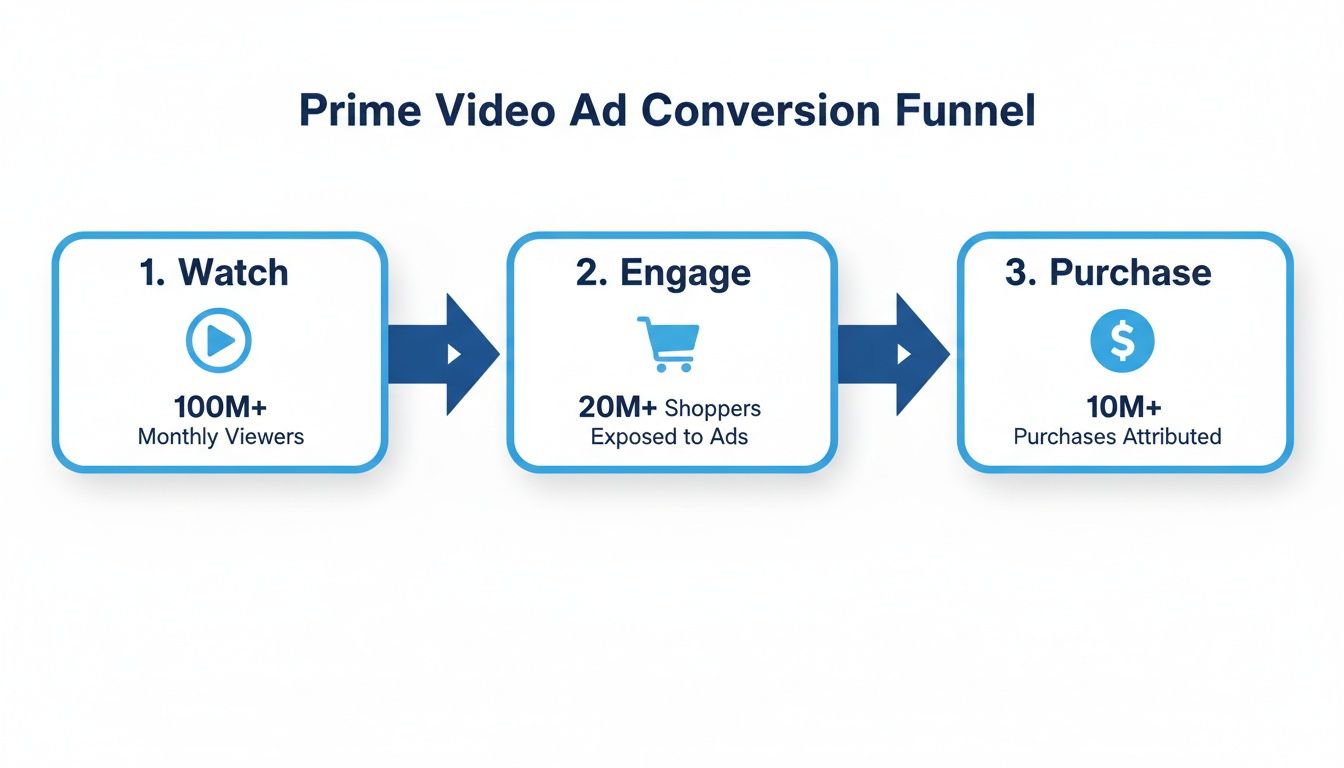
As you can see, Prime Video ads help collapse that old-school marketing funnel, creating a much more direct line from watching to shopping.
Getting Your Creative Past The Gatekeepers
One of the biggest hurdles you’ll face is getting your ad creative approved. Amazon is extremely protective of the Prime Video viewing experience, and for good reason. Your ads have to meet some very high standards.
Here’s a quick rundown of what to prepare for:
- The Tech Specs: Your video files need to be perfect. We’re talking precise resolution, frame rate, audio levels, and file size. If you’re off on any of these, it's an automatic rejection. No exceptions.
- The Content Rules: Every ad is reviewed for brand safety, clear messaging, and overall quality. Any claims you make need to be backed up, and the ad can't be misleading or annoying.
- The Waiting Game: This isn’t an overnight process. You need to plan for an approval window of at least 3-5 business days. If you're launching around a major holiday or sales event, expect it to take even longer.
Getting your creative kicked back multiple times is a surefire way to blow up your launch timeline. The best advice I can give is to study Amazon’s ad policies before you even start production. Get it right the first time.
Pro Tip: Your Prime Video ad is not just a repurposed TikTok video or a TV spot you had lying around. The creative has to feel like it belongs in that premium, lean-back environment. If it doesn't, viewers will tune it out, and you won't get the results you're after.
Finally, choosing between self-service and managed service is a foundational decision. If you're leaning toward the hands-on approach and want to really dig into programmatic strategy, checking out a comprehensive guide to Amazon DSP ads can give you the advanced knowledge you need to scale your campaigns effectively.
Mastering Audience and Contextual Targeting
Let's be honest: reach is useless without relevance. The real magic of advertising in the Amazon ecosystem isn't just the sheer number of eyeballs. It's the incredible depth of first-party data you can tap into.
When you run ads on Prime Video, you're not just buying a spot on another streaming service. You're accessing a goldmine of real-world consumer behavior signals that no one else can offer. This is where you stop throwing darts in the dark and start performing surgical, data-backed advertising that finds the right people, in the right context, at the perfect moment.
This data is directly tied to how people actually shop, which transforms your ad spend from a simple expense into a direct driver of growth. You're no longer guessing who might be interested in your hiking boots; you're building campaigns around people who have already proven they are.
Leveraging Amazon’s First-Party Data for Audience Segmentation
At the core of Prime Video's targeting power is Amazon's rich, retail-driven data. This allows you to build custom audience segments with a level of detail that’s simply not possible on other platforms.
Forget basic demographics. We're talking about targeting based on what people actually do and buy.
- In-Market Audiences: This is your low-hanging fruit. You can reach viewers who are actively browsing or searching for products just like yours. If you sell home appliances, you can target users who recently looked at refrigerators or dishwashers on Amazon.com.
- Lifestyle Audiences: Go broader by targeting based on aggregated shopping patterns that signal specific interests. Think fitness enthusiasts who regularly buy workout gear or new parents who are constantly purchasing baby products.
- Competitor Conquesting: Here’s where it gets really interesting. You can serve ads directly to households that recently bought from your key competitors. It's a prime opportunity to win them over.
- Lookalike Audiences: Have your own customer list? Upload it (like a CRM list), and Amazon will find a new audience of viewers who share similar shopping and viewing habits.
This direct line between ad exposure and purchase intent is what makes Prime Video a powerful performance channel. And the scale is massive. Prime Video’s ad tier is on track to hit over 315 million average monthly ad-supported viewers across 16 countries. This allows you to target diverse audiences within premium shows like 'The Boys' or during NFL Thursday Night Football, reaching viewers who, according to data, have higher average annual incomes. You can dig into more on this audience growth in this MarketingWeek analysis.
The game-changer with Prime Video isn't just targeting viewers—it's targeting shoppers. The ability to build an audience based on what people buy, not just what they watch, collapses the funnel and creates a direct line between ad spend and sales.
Going Beyond Who to Where With Contextual Targeting
Audience targeting tells you who to reach. Contextual targeting tells you where to reach them. Combining the two is how you make your campaigns truly effective, ensuring your message lands in an environment that strengthens its impact.
Placing your ad within the right content makes it feel less like an interruption and more like a natural part of the show. In a premium, lean-back environment where viewers are glued to the screen, this is incredibly important.
Key Contextual Targeting Options
You can align your brand with specific types of content to create a powerful association and grab attention when viewers are most receptive.
Targeting by Content Genre:
Placing your ads within broad content categories is a great starting point.
- For example: A brand selling outdoor gear could target viewers watching adventure documentaries. A luxury car brand might focus on dramas and thrillers that have a more premium feel.
Targeting by Specific Shows or Movies:
For pinpoint accuracy, you can have your ads run during specific Amazon Originals or other licensed content.
- For example: A tech company launching a new futuristic gadget could strategically place ads during a popular sci-fi series like The Expanse to connect with a highly relevant and engaged audience.
Targeting Live Sports:
Live sports, especially with tentpole events like the NFL's Thursday Night Football, are a huge opportunity. The audience is locked in, watching live, and often with friends or family.
- For example: Snack and beverage brands consistently see massive success advertising during live games. They’re reaching people at the exact moment they’re thinking about game-day food and drinks.
When you combine smart audience segmentation with thoughtful contextual placements, you create a powerful synergy. You're not just reaching a potential customer; you're reaching them while they're watching something that perfectly complements your brand’s message. This one-two punch is how you maximize relevance, drive engagement, and turn your Prime Video campaigns into a reliable engine for growth.
Creating Ads That Captivate and Convert
Running an ad on Prime Video isn’t just another media buy. You’re literally in someone’s living room, during their downtime. This is a premium, lean-back environment, and your creative has to earn its spot.
This is not the place to repurpose a quick social media clip. You need to craft an ad that feels native to the streaming experience itself. Anything less feels jarring and out of place, which is a fast way to waste your ad spend and even turn viewers off your brand.
Narrative and Visuals for the Big Screen
The first few seconds are everything. Viewers on Prime Video are settled in, ready to watch a show. Your ad needs to hook them immediately with a strong visual and make it clear who you are.
Keep the story simple and direct. Don't try to cram too much into a 15 or 30-second spot. Focus on one powerful message that solves a real problem or highlights a key benefit.
Visually, think cinematic. High production quality is a must-have, not a nice-to-have. Your ad will be running alongside Amazon Originals, and it needs to look like it belongs there. Also, remember this is a sound-on experience, so make sure your audio—from voice-overs to music—is crisp, clear, and adds to the story.
The best Prime Video ads don't feel like interruptions. They feel like compelling, bite-sized stories that respect the viewer's attention. The goal is to blend in, not shout.
Shortening the Path to Purchase with Interactive Ads
This is where Prime Video advertising really sets itself apart from old-school TV. Because it's connected directly to Amazon's retail ecosystem, you can use interactive ad formats to collapse the sales funnel right then and there. You’re turning passive viewing into active shopping.
These formats make it incredibly easy for viewers to act on their interest without fumbling for another device.
- Shoppable Overlays: Viewers can browse product details and add items straight to their Amazon cart with their remote. It’s about as frictionless as commerce gets.
- QR Codes: Simple, but so effective. A QR code can send viewers to a specific product page, your Brand Store, or a custom landing page, instantly bridging the gap between the TV screen and their phone.
These aren't just flashy features; they get real results. Amazon's own data shows that interactive ad formats drive a 30% uplift in brand awareness and 36% more orders compared to standard video ads.
Creative Best Practices That Drive Results
To make sure your creative truly connects, stick to a few core principles. This is often the difference between an ad that gets ignored and one that actually grows your business.
- Lead with Your Brand: Get your logo and product on screen within the first three seconds. Don't wait for a big reveal at the end.
- Optimize for Clarity: Use bold, easy-to-read text and a clear call-to-action (CTA). If you want them to "Shop Now," make sure they can't miss it.
- Show, Don't Just Tell: Demonstrate your product in action. Showing how it solves a problem is always more powerful than just listing its features.
If you’re looking for inspiration, it's worth checking out some of the best Amazon video ads examples to see what top-performing creative looks like. And for a deeper dive into using new tools for production, this guide on how to create video ads with AI that actually convert has some great, practical advice.
Measuring Success When TV Ads and E-commerce Collide
The real magic of advertising on Prime Video isn't just about getting your brand into millions of living rooms. It's about what happens next. For any leader focused on the bottom line, this is where Prime Video stops being a simple media buy and becomes a powerful engine for growth.
It’s time to move past the old-school TV metrics like Gross Rating Points (GRPs). Honestly, they don't mean much in this world. Success here is measured in real business impact: sales lift, new customers, and a tangible return on every dollar you spend. The Amazon ecosystem gives us a closed-loop measurement system that traditional TV could only ever dream of, finally letting us draw a straight line from an ad view to a purchase.
Going Deeper with Amazon Marketing Cloud
If you want to truly understand what’s working, the standard Amazon DSP dashboard isn't enough. You need to get your hands dirty, and that’s where Amazon Marketing Cloud (AMC) comes in. Think of it as a secure data clean room where you can mix your own brand's data with Amazon’s campaign signals to get the full story.
AMC is your source of truth. Instead of just seeing that a campaign drove sales, it lets you ask why. You can build your own queries to untangle complex customer journeys and find answers to the tough questions:
- What's the real path to purchase? How many times does someone need to see our Prime Video ad before they buy? What if they see a display ad on a Fire TV tablet first—does that make them more likely to convert later?
- Are we talking to the right people? You can see which of your audience segments are actually responding to video ads versus, say, Sponsored Display. This is gold for allocating your budget more effectively.
- Where's the point of diminishing returns? Analyze ad frequency to pinpoint that exact moment when you’re no longer driving incremental sales and just burning cash.
Using AMC isn't just about pulling reports. It's about finding real, actionable intelligence that makes your next campaign smarter and more profitable.
You need to shift your mindset from asking, "Did my ad work?" to "How did my ad influence the entire customer journey, and how can I tweak that path to get the best results?" AMC is what gives you the data to answer that second, much more important question.
Translating Streaming Metrics into E-commerce Language
For those of us who live and breathe e-commerce metrics like ACOS and ROAS, measuring a top-of-funnel channel like streaming TV can feel a little... fuzzy. But you don't have to guess. You can absolutely create direct equivalents to track how efficiently your Prime Video ads are performing.
You won’t find a neat "ACOS" column in your Prime Video reports, but you can calculate a Total ROAS (TROAS) that tells a much bigger story. It blends your ad spend with the total sales lift you can attribute to the campaign, which includes:
- Direct-Attributed Sales: The easy one. Purchases made within a set time after someone views your ad.
- Brand Halo Sales: Keep an eye on your branded search volume and organic sales. A strong campaign will lift these, too.
- New-to-Brand (NTB) Lift: This is huge. Track the percentage of sales from customers who've never bought from you before. It’s a key indicator of sustainable growth.
This holistic approach connects your top-funnel awareness efforts directly to your bottom-line results. To get this right, you really need to understand the nuances of Amazon advertising attribution models, as they’re the foundation for figuring out how each touchpoint contributed to the final sale.
Seeing the Full-Funnel Impact
A great Prime Video campaign does more than just spike sales for a week. It builds your brand equity and feeds your organic growth flywheel for the long haul. And thankfully, Amazon’s tools let us track that full-funnel impact.
The sheer scale of the platform is what makes this kind of robust measurement possible. Prime Video's ad-supported viewership is exploding, jumping from 200 million monthly viewers in April 2024 to a projected 315 million by late 2025. A 57.5% increase like that gives us a massive, highly engaged audience to work with—an audience that is 132% more likely to spend on Amazon each month. As you can see in the analysis from Advanced Television, this provides a statistically sound base for getting accurate data.
By running Brand Lift studies through Amazon, you can actually quantify changes in awareness, ad recall, and purchase intent. When you pair those upper-funnel metrics with hard sales data from AMC, you get the complete picture of your ROI. This is how you prove that your investment isn't just selling products today—it's building a stronger brand for tomorrow.
Answering Your Top Questions About Prime Video Ads
Jumping into a new ad platform always sparks a ton of questions. For brands and e-commerce leaders, they usually boil down to cost, creative, and results. Let's tackle the big ones we hear all the time about advertising on Prime Video.
What Is the Typical CPM to Advertise on Prime Video?
Amazon doesn't publish a public rate card, but based on industry data and campaign experience, you can expect CPMs to land somewhere between $25 and $50+.
The final price tag really depends on a few things: how dialed-in your targeting is, the ad format you pick, and how competitive the inventory is at that moment. Snagging a spot during a live Thursday Night Football game? That’s going to cost a premium, and for good reason.
But honestly, the CPM is only half the story. The real conversation is about your return. A higher CPM that connects you directly with a high-intent audience and drives profitable sales is a win every time. We always steer clients toward focusing on the total return on ad spend (ROAS) rather than getting hung up on the initial media cost.
Can I Just Use My Existing TV Commercials on Prime Video?
Technically, you can. As long as your file meets Amazon's technical specs, you can upload it. But the real question is, should you? My advice is almost always no—at least not without a few key tweaks.
A straight "lift and shift" from broadcast TV to streaming is a huge missed opportunity. The viewing experience is completely different. To get the best results, you need to think like a streaming advertiser:
- Get to the point, fast. Make sure your brand and product are front and center within the first three seconds. You have to capture attention immediately.
- Lean into the audio. Unlike social feeds where sound-off is the norm, almost everyone on Prime Video has the volume up. This is your chance to use great audio to tell a compelling story.
- Make it shoppable. A generic TV spot can't use interactive overlays or QR codes. These are the tools that close the gap between seeing an ad and making a purchase, and they're crucial on Prime Video.
How Long Does It Take to See Results from a Campaign?
This really comes down to what you're trying to achieve. If your main goal is brand awareness, you can start seeing a lift in metrics like ad recall or people searching for your brand name within just a few weeks.
But if you're measuring direct sales impact, especially for items that cost a bit more or aren't an impulse buy, you need to play the long game. The "halo effect" from these campaigns builds over time. You'll want to use a tool like Amazon Marketing Cloud (AMC) to see the full picture. It can show you how your ads influence organic sales, branded searches, and new-to-brand customers over an entire quarter.
What Is the Minimum Budget to Get Started?
Amazon doesn't list an official minimum spend, but you can't expect to see meaningful results by just dipping your toes in with a few thousand dollars. You need to invest enough to get statistically significant data, otherwise you're just guessing.
For a self-serve campaign run through the Amazon DSP, we typically recommend a test budget in the $25,000 to $50,000 range. If you're going with Amazon's managed service or planning a larger-scale launch, that number will be significantly higher.
Remember, the point of a test isn't to spend as little as possible. It's to invest enough to get clear, reliable data that tells you exactly what's working so you can scale with confidence.
Making Prime Video ads work requires a partner who gets the connection between media investment and real business growth. At Headline Marketing Agency, we build data-driven PPC and DSP strategies focused on profit and scale. Discover how we can help you dominate the Amazon marketplace.
Get Your Free Amazon PPC Audit
Discover untapped growth opportunities and see how our data-driven approach can improve your ROAS.
Get Free Audit →Wollen Sie Ihre Amazon PPC-Performance aufs nächste Level bringen?
Lassen Sie Ihre Amazon PPC-Kampagnen professionell analysieren und entdecken Sie neue Wachstumsmöglichkeiten.