10 Best Conversion Rate Optimization Tools for 2026
Compare the best conversion rate optimization tools for ecommerce and Amazon sellers, including testing, heatmaps, replay, pricing, and personalization.

Buying the platform with the longest feature list is poor advice. The best tool is the one that changes a business decision, whether that means publishing stronger Amazon listing content, fixing a confusing storefront, or rejecting a discount that increases orders but reduces profit.
The best conversion rate optimization tools don't all measure the same thing. An Amazon-native experiment can compare listing changes against sales and conversion rate. A consumer panel reveals preferences, while heatmaps and session replay show behavior. Neither preference nor behavior alone proves that a change generates more purchases.
Traffic matters more than software sophistication. In a survey of 402 marketing professionals running A/B tests, 51% cited limited traffic, 47% cited insufficient resources, and 38% said execution took too much time, according to Ascend2's A/B testing research. Buying more testing capacity won't fix an underpowered experiment.
Choose the decision first, the measurement method second, and the software last.
These 10 options cover marketplace experimentation, pre-launch feedback, owned-storefront testing, behavioral research, and pricing optimization. The recommendations distinguish purchase evidence from diagnostic signals and address implementation, pricing, traffic requirements, and limitations.
For ecommerce leaders, the commercial question stays consistent: Will this tool help us make a more profitable decision? For Amazon brands, that also means connecting listing improvements with PPC efficiency, organic visibility, and sustainable growth rather than celebrating isolated conversion metrics.
1. Amazon Manage Your Experiments
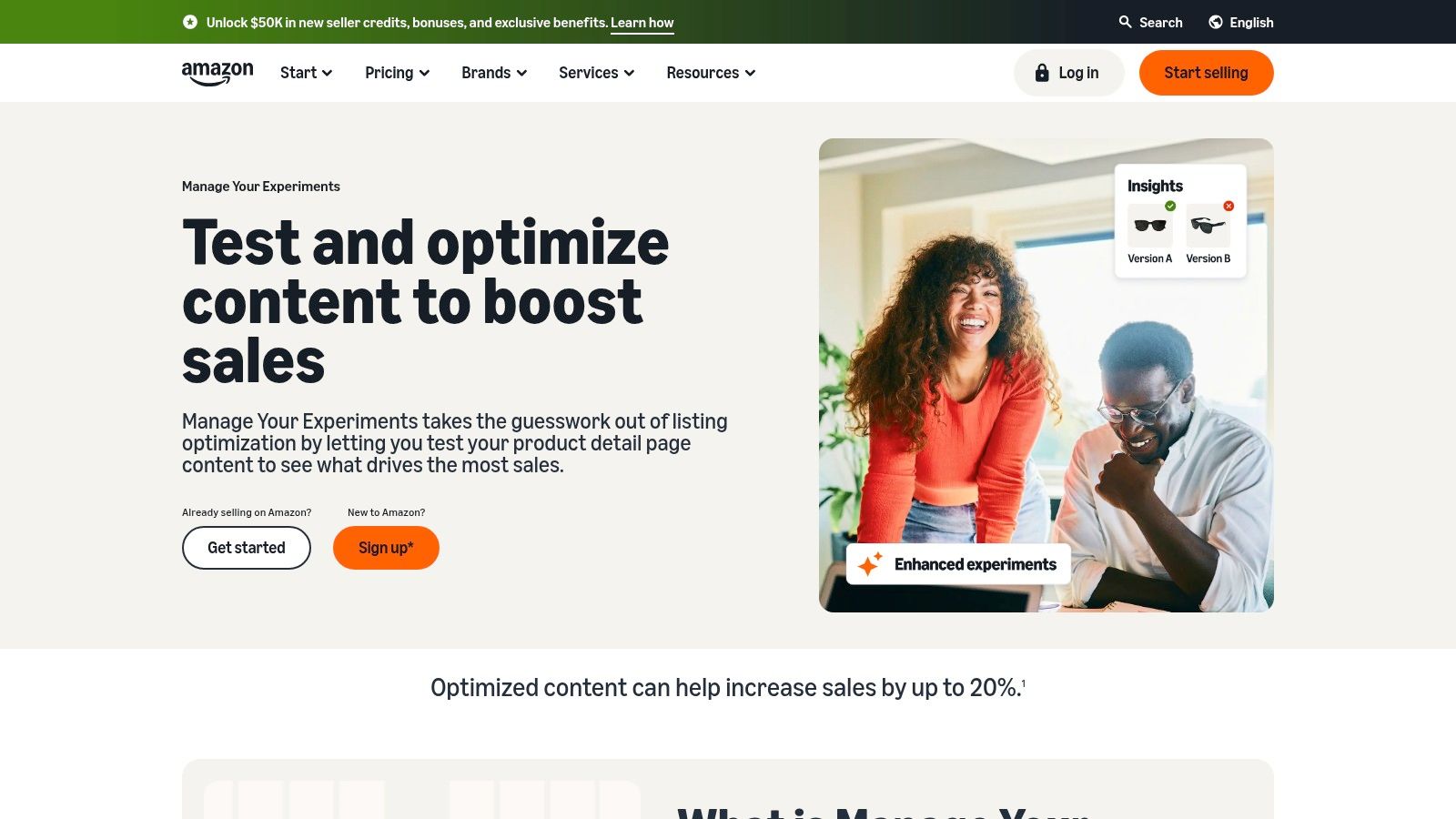
Choose Amazon Manage Your Experiments when you need to decide which listing content deserves live marketplace traffic. Unlike preference polling, it evaluates how actual Amazon shoppers respond to competing content.
The platform randomly divides shoppers between versions and reports outcomes including sales and conversion rate. Supported content includes titles, images, bullet points, descriptions, A+ Content, and Brand Story, with an option to publish winning content automatically.
Best for purchase-based listing decisions
Access is included for eligible sellers without a separate experiment-tool fee; eligibility requires Brand Registry and a Professional selling account, listed at $39.99 monthly plus selling fees, while Amazon recommends 8–10 weeks when selecting an experiment duration on its Manage Your Experiments page.
- Main advantage: You're testing the Amazon shopping experience rather than asking consumers to predict their behavior.
- Main constraint: Products need enough traffic to qualify, and results aren't immediate.
- Best first test: Compare content that addresses a specific purchase objection, such as unclear product dimensions or an ambiguous use case.
Keep the interpretation commercial. A more clickable image isn't automatically the better choice if shoppers arrive with the wrong expectations and don't purchase.
For PPC teams, use the result to decide which content should support additional advertising investment. Improve the listing before scaling traffic into a weak purchase experience, then monitor whether stronger conversion supports profitable acquisition and broader marketplace growth.
2. PickFu
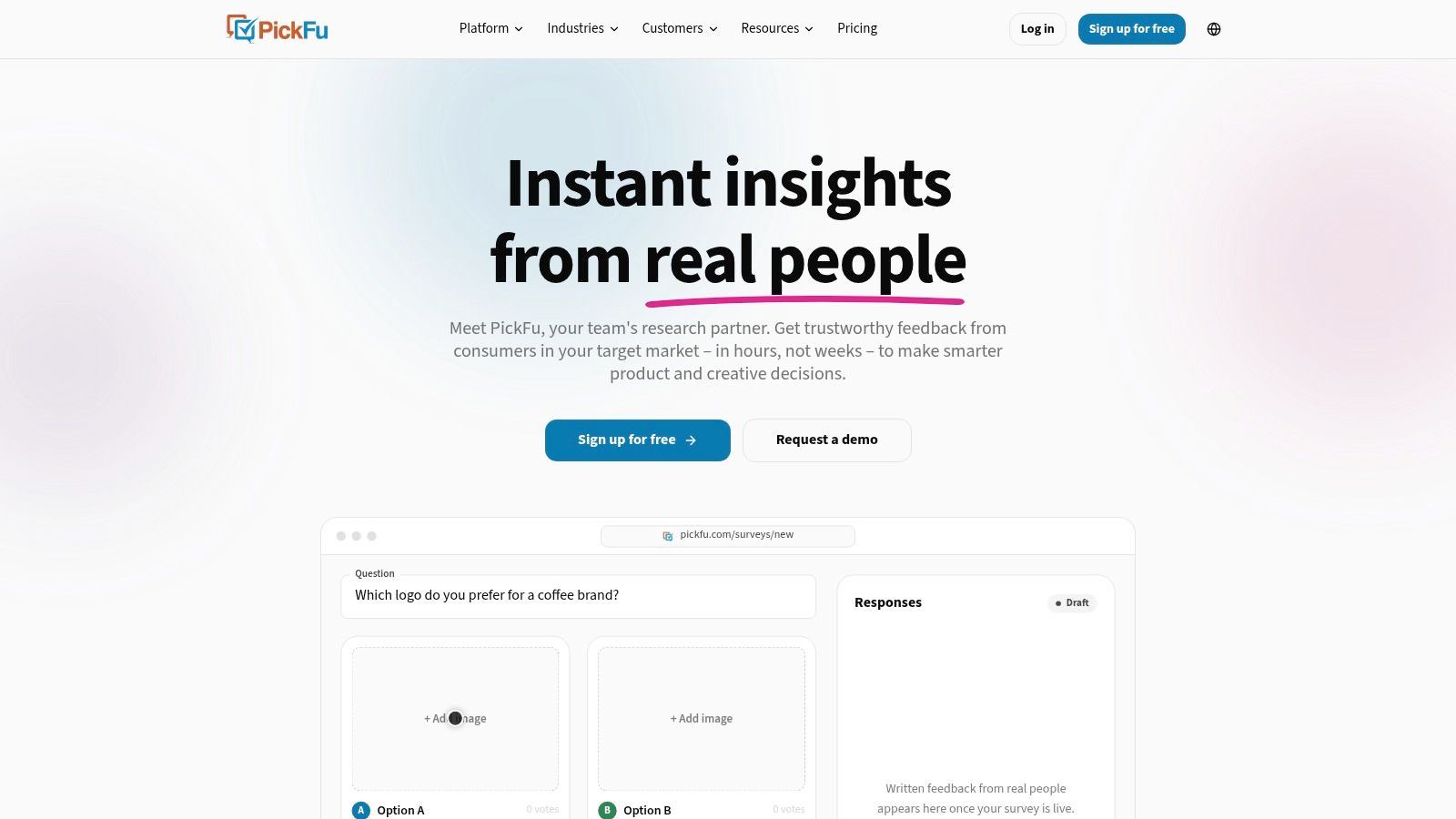
A product hasn't launched, its listing has little traffic, and the team disagrees about the main image. PickFu is the right research tool for that decision, not a substitute for purchase-based experimentation.
Its consumer panels evaluate product concepts, images, titles, descriptions, packaging, and A+ Content. Written responses help teams understand why an option appeals or confuses, while AI analysis can help organize the feedback.
Use preferences to improve the next experiment
PickFu lists surveys starting at $1 per response, a $99 monthly PickFu+ option, and targeting across more than 100 traits and 15 countries, with costs varying by audience and survey.
Its Seller Central integration can sync Amazon listings, and pay-as-you-go access avoids a required annual subscription. That makes it useful for focused research, although repeated studies with larger samples can become expensive.
Research boundary: A panel winner is a stronger candidate for a live test, not a proven conversion winner.
Recruit respondents who resemble the intended buyer and ask about a clear decision. Comparing packaging clarity is more actionable than asking which design people generally like.
The trade-off is speed versus commercial certainty. PickFu can help eliminate confusing concepts before launch, but respondents aren't making actual Amazon purchases. Use their explanations to refine creative, then validate the strongest candidate through marketplace experimentation when traffic permits.
For smaller brands, this is a better use of research spend than repeatedly launching live tests that can't produce reliable conclusions.
3. VWO
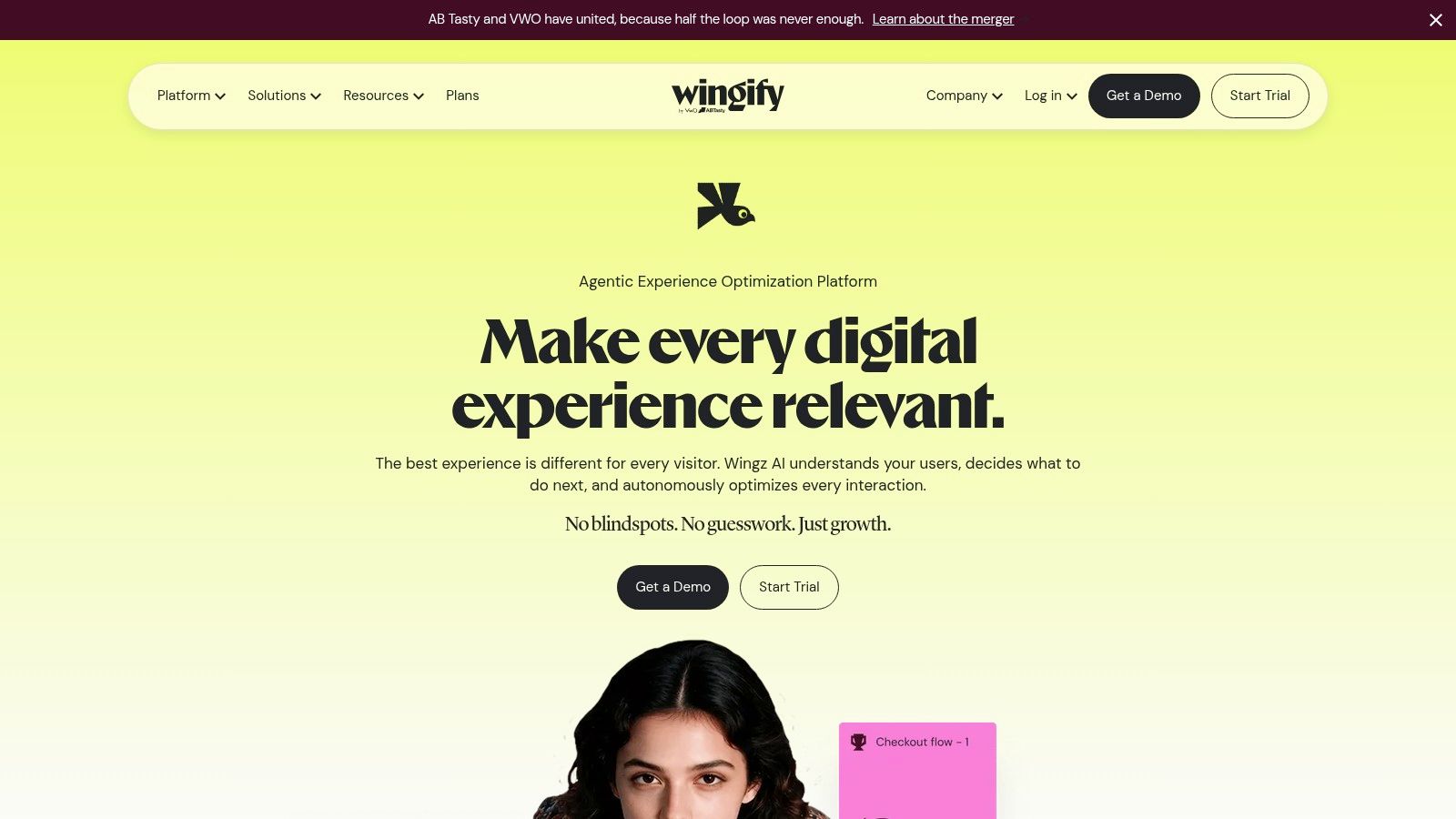
VWO is a strong choice for DTC teams building a structured owned-site experimentation program. It supports A/B and multivariate website testing, visual editing, and broader optimization capabilities across its plans.
Use it to compare product-page messaging, landing-page layouts, or steps in an owned conversion journey. Don't buy it expecting to test Amazon detail-page content directly.
Buy for the workflow you can sustain
VWO's product and plan information outlines its capabilities, with pricing dependent on product selection and usage. Confirm which features are included before treating the platform as a complete research-and-testing stack.
- Why choose it: Your team wants experimentation alongside broader CRO capabilities.
- What to assess: Website implementation, conversion tracking, available traffic, and who will build and approve variations.
- Where to start: A high-priority page with a clear purchase hypothesis and a measurable downstream outcome.
Keep early experiments simple. Multivariate functionality adds little value when the team lacks the traffic or execution capacity to interpret the results.
Reported marketing survey figures put 71% of organizations at only two or three website tests monthly, according to this A/B testing statistics compilation. That makes operational fit more important than theoretical testing capacity.
Choose VWO if your team will consistently turn research into controlled tests. For campaign landing pages, prioritize purchases or meaningful downstream outcomes over engagement alone, especially when visitors eventually leave the owned site to shop elsewhere.
4. Optimizely Web Experimentation
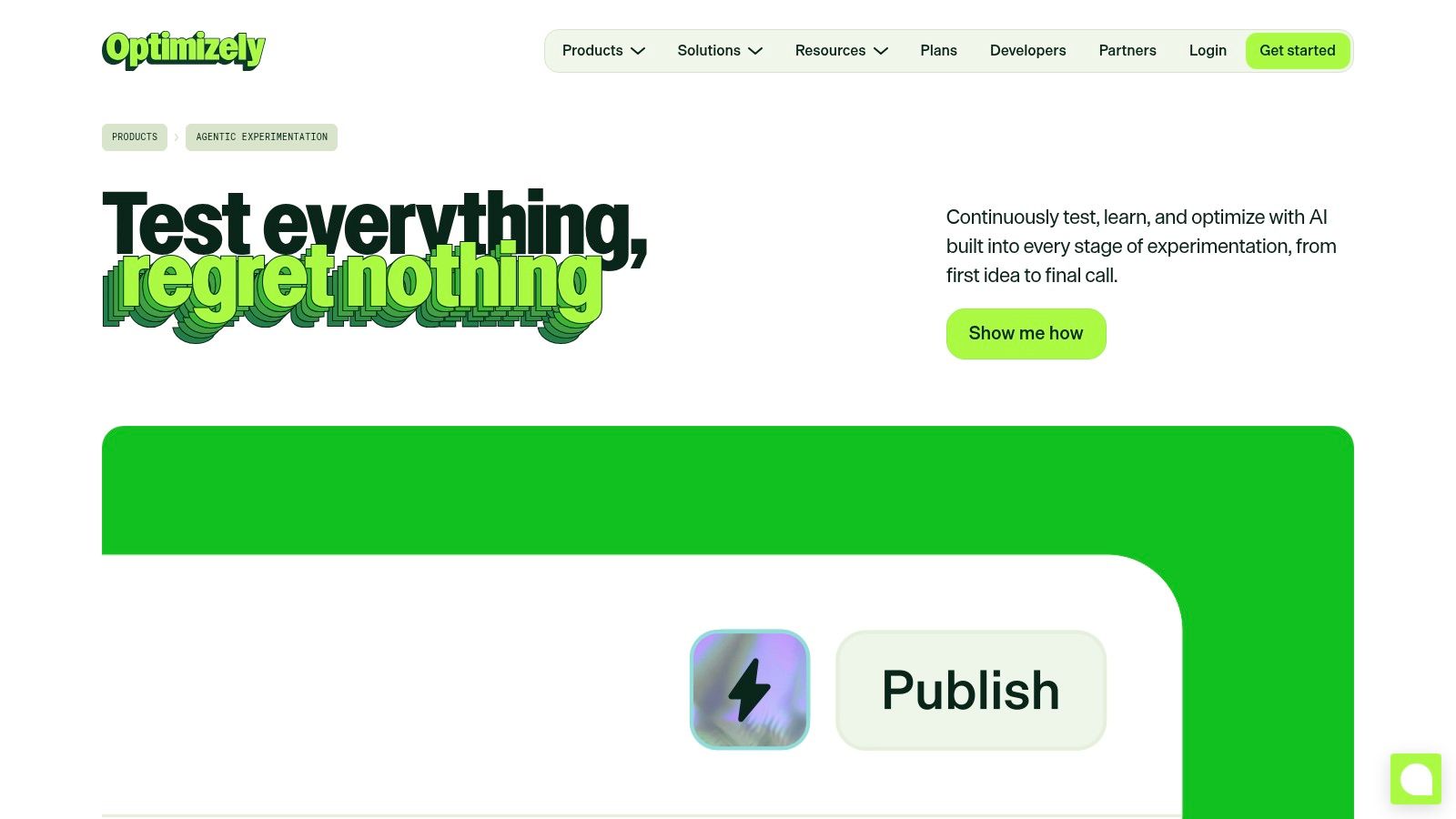
Optimizely makes sense when experimentation is an established business function, not an occasional marketing task. Choose it for complex owned-site programs with dedicated people, technical support, and clear measurement ownership.
Its experimentation offerings combine visual workflows with code-based and server-side approaches. Configurable targeting and metrics support tests across pages and conversion journeys, while the broader product portfolio extends into personalization.
Enterprise capability needs enterprise execution
Optimizely's experimentation offerings use customized pricing. Request a quote that separates the products, traffic assumptions, and implementation work your organization needs.
The advantage is flexibility. Marketing teams can work on visible page changes while technical teams address more involved experiences, provided the purchased products support those requirements.
The disadvantage is organizational overhead. A smaller brand testing occasional page edits should choose a lighter platform rather than paying for capabilities it won't operationalize.
- Best fit: Established experimentation teams managing complex customer journeys.
- Buying requirement: Confirm which capabilities belong to Web Experimentation and which require another product.
- Commercial guardrail: Define revenue, purchase, and profitability metrics before building audience-specific experiences.
Optimizely won't test Amazon product pages, and its sophistication won't rescue unreliable event tracking. Require a demonstration using your storefront, your conversion definition, and your approval process.
The recommendation is straightforward: buy Optimizely when the complexity of your experimentation program justifies it. Don't buy it merely because your brand aspires to run a larger program someday.
5. Convert Experiences
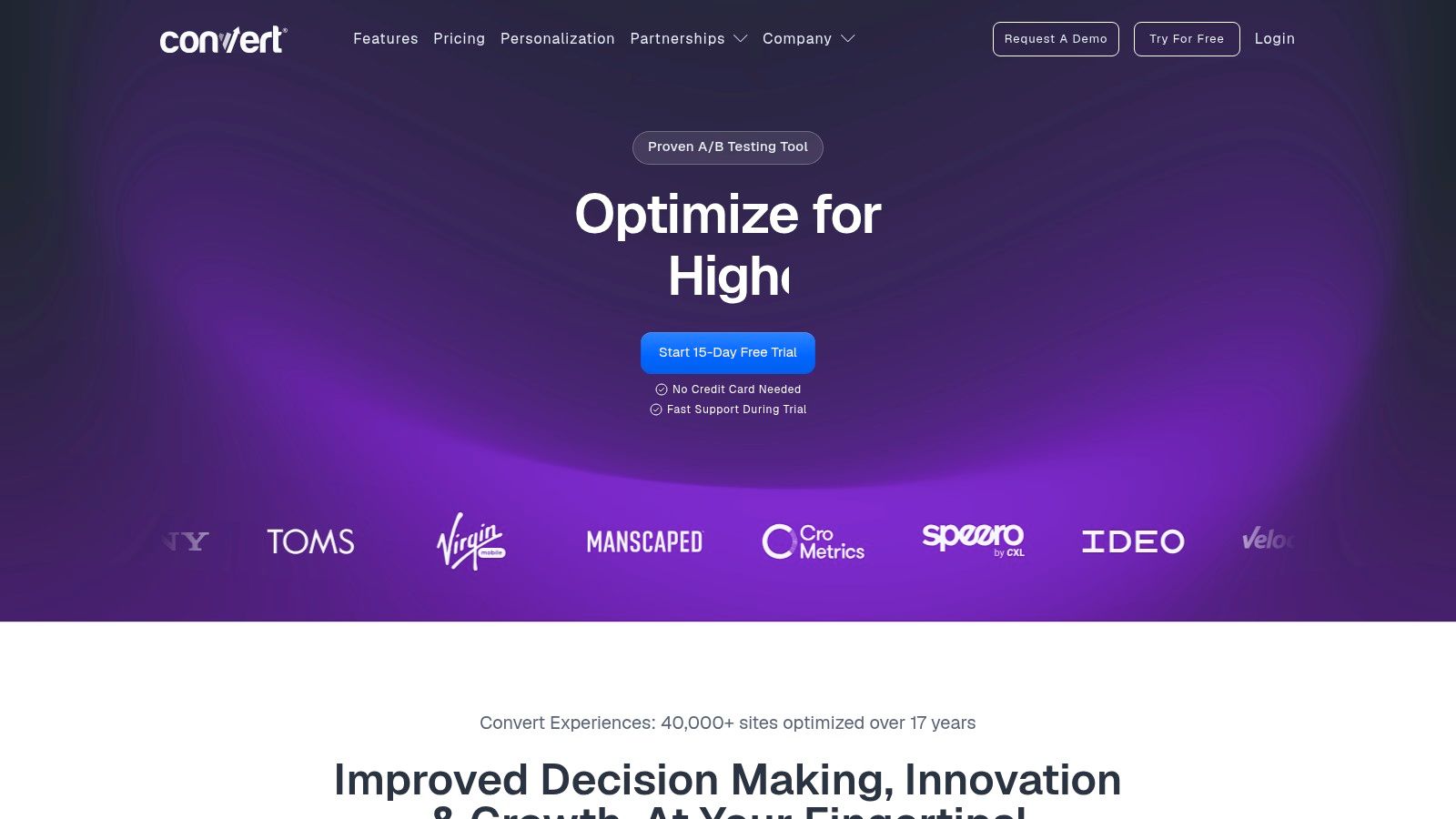
Convert Experiences belongs on the shortlist when you want focused website experimentation without purchasing a broader marketing suite. Its capabilities include A/B testing, personalization, and audience segmentation for owned digital experiences.
That focus suits teams with existing analytics and research tools. The purchase decision becomes whether Convert fits the experimentation layer, rather than whether the company should replace its wider stack.
Evaluate tested-user economics
Convert publishes pricing based on monthly tested-user volume, lists more than 90 integrations, and offers a 15-day free trial. Published pricing helps with evaluation, but costs still increase with tested-user volume.
Use the trial to validate implementation and workflow, not to force a statistically conclusive commercial result. Check that exposure logging, conversion events, and audience assignments behave as expected.
- Strength: A focused experimentation product with comparatively transparent pricing.
- Trade-off: Paid plans can still be difficult to justify for low-traffic brands.
- Right test: A material landing-page or product-page change tied to purchase behavior.
Before signing, estimate the traffic that will enter experiments. Total website traffic and tested-user volume aren't interchangeable planning assumptions.
Also examine exportability. Google Optimize and Optimize 360 became unavailable after September 30, 2023, demonstrating why continuity and preservation of experiment history matter, as documented in Google's Optimize sunset notice.
Choose Convert when its focused workflow and usage model fit your program. Keep Amazon-native listing experiments separate, and preserve hypotheses, configurations, and results outside the platform.
6. AB Tasty
AB Tasty is the choice for brands coordinating marketing and product experimentation across owned digital touchpoints. Its offering covers web experimentation, feature experimentation, and personalization.
The attraction is cross-functional scope. A retail organization can evaluate storefront messaging and broader digital experience changes within a coordinated program, rather than treating each team's optimization work as unrelated.
Choose it for shared execution
AB Tasty uses a generally sales-led pricing approach. Ask for a proposal tied to the digital properties, capabilities, implementation support, and team responsibilities you need.
Its breadth is useful when marketing and product teams both have an active testing backlog. It's unnecessary overhead when a small team only needs occasional landing-page experiments.
- Primary advantage: Experimentation and personalization can support multiple functional teams.
- Primary limitation: More capabilities also mean more decisions about ownership, deployment, and measurement.
- Marketplace boundary: Tests apply to owned digital properties, not Amazon listing content.
Before adding personalization, establish whether the underlying experience works. Creating audience-specific versions of a weak proposition can multiply production work without resolving the purchase objection.
Assign an owner to the business decision, not just to launching the experiment.
For example, a storefront offer test needs someone responsible for margin interpretation, not merely reporting which version generated more orders. Product, marketing, and finance should agree on that interpretation before launch.
Choose AB Tasty when shared experimentation is already an operational priority. Require a demonstration that follows a real hypothesis from implementation through purchase measurement and a final rollout decision.
7. Contentsquare
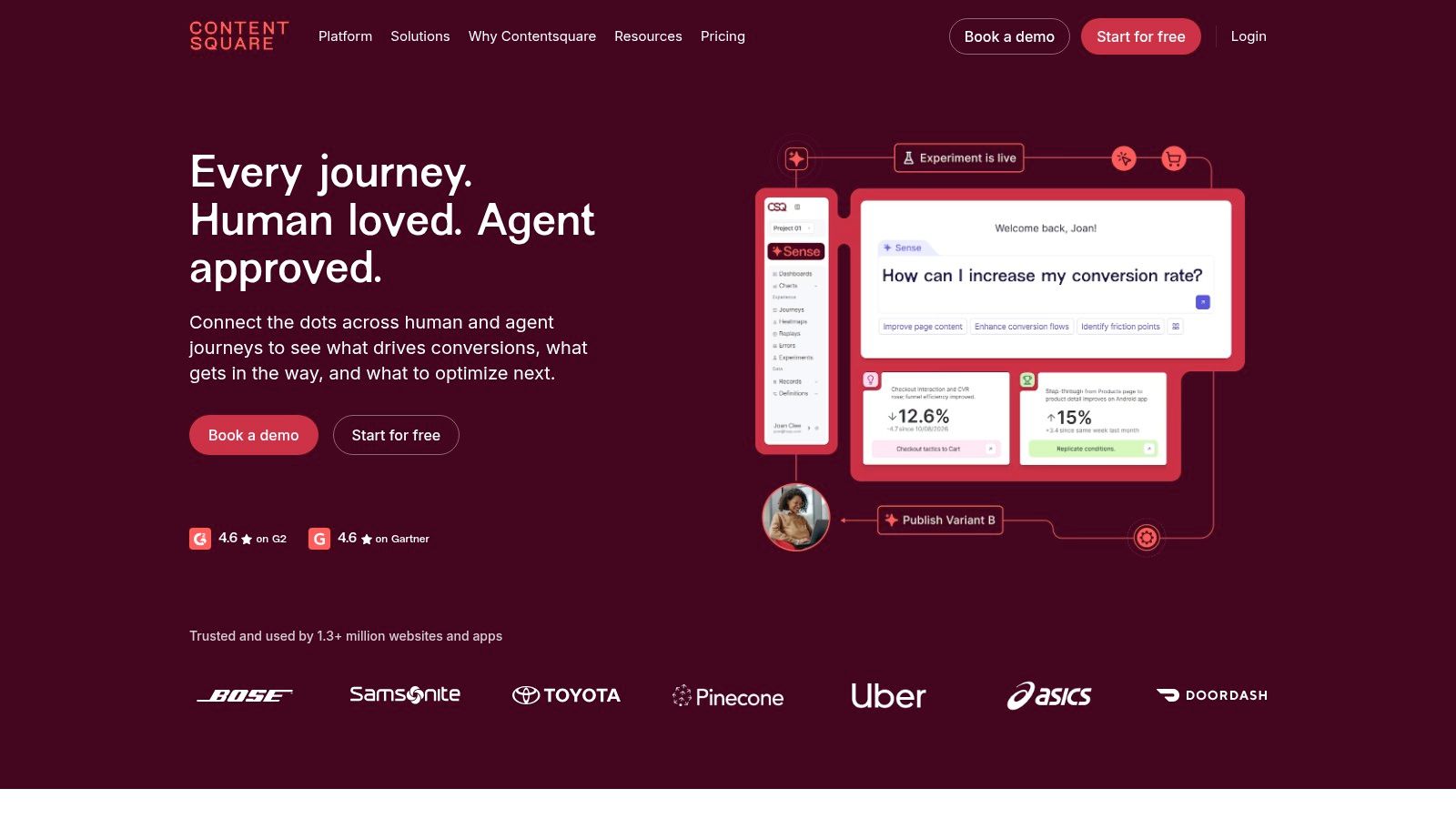
Visitors reach the product page but disappear before purchasing. Contentsquare helps teams investigate that friction, using session replay, heatmaps, funnel analysis, and customer feedback.
This is behavioral research and experience analysis, not automatic proof that a proposed redesign will improve sales. Use it to identify a credible problem before allocating development or testing resources.
Diagnose the problem before designing the fix
Contentsquare lists a free plan supporting up to 200,000 monthly sessions, providing a starting point for evaluation. Advanced requirements may need a paid plan, so assess the available features rather than assuming the free allowance covers the entire research workflow.
Start with a defined journey. Compare where visitors leave, review relevant sessions, and use surveys to investigate questions that observation can't answer.
- Best use: Connecting funnel drop-off with visible friction and customer explanations.
- Main advantage: Multiple forms of experience research in a connected workflow.
- Important limit: Website and app observations don't reveal how shoppers interact with Amazon listings.
Don't review recordings without a question. Assign the investigation to a purchase obstacle, such as uncertainty about product suitability or confusion around delivery information.
Implementation should include appropriate privacy review, masking, and clear ownership of the research backlog. Otherwise, teams can collect extensive behavioral evidence without making a decision.
Choose Contentsquare when your team needs deeper diagnosis across a customer journey. Turn the findings into prioritized hypotheses, then validate commercial changes through controlled experiments rather than treating heatmap activity as conversion evidence.
8. Hotjar
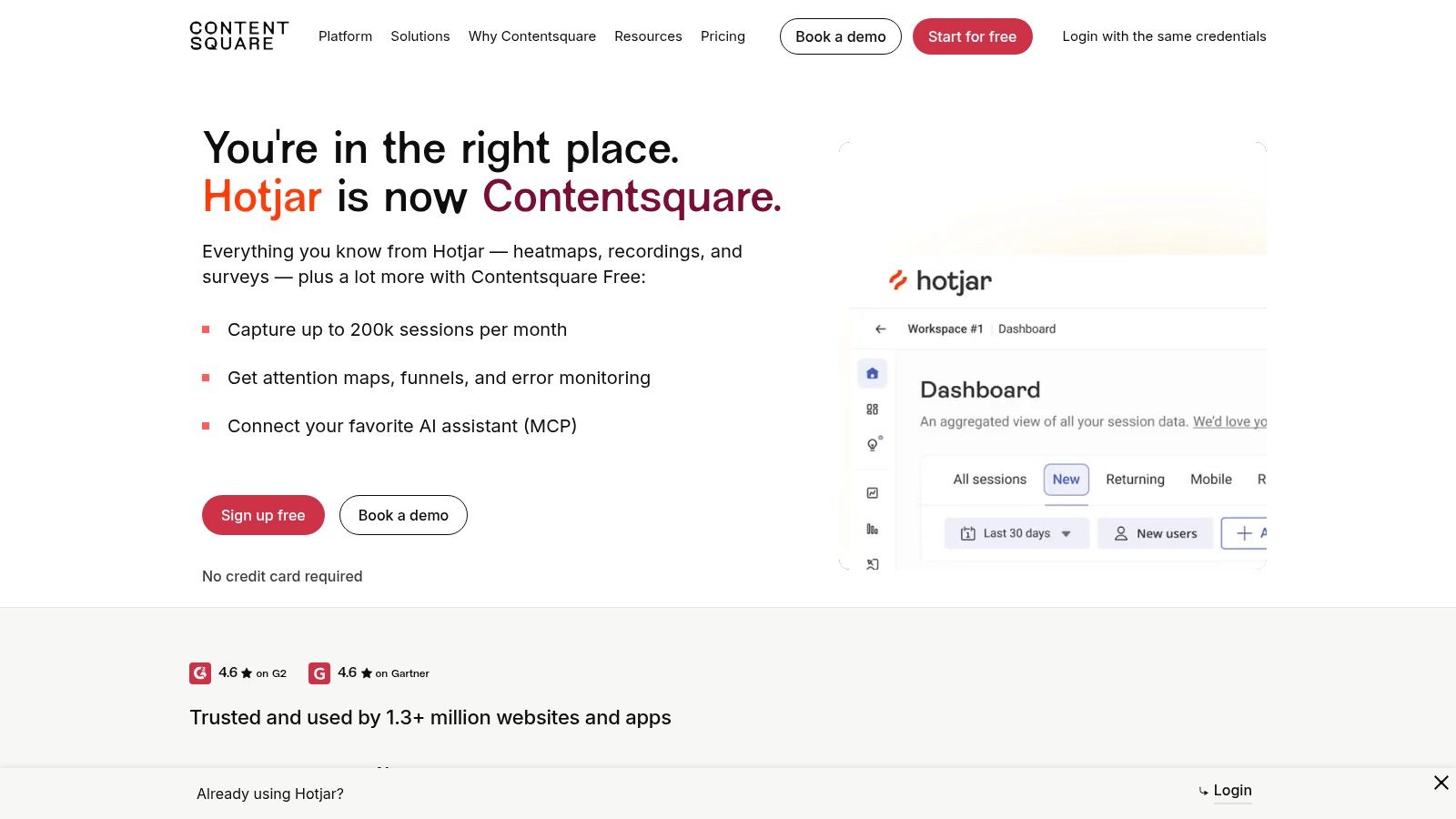
Choose Hotjar when your immediate need is understandable website feedback and visual behavior research. Heatmaps and session recordings help teams inspect confusing experiences, while surveys and feedback tools add visitors' explanations.
User interviews and tests sit in a separate product area. Check the current product packaging before budgeting for a combined research workflow.
Ask why, then test the answer
Hotjar lists a free Basic plan and paid Observe plans starting at $31 monthly, with costs depending on usage and product selection. Basic access provides an evaluation route, but teams should confirm the coverage they need for meaningful research.
A practical starting point is a DTC product page with a known performance issue. Inspect relevant sessions and ask a focused question about missing information or purchase hesitation.
- Useful evidence: Shoppers repeatedly struggle with a specific page interaction.
- Weak conclusion: A busy heatmap means the page persuades people to buy.
- Better next step: Test a targeted change against a purchase outcome.
Hotjar's research tools don't provide controlled A/B-test results or Amazon listing-interaction data. Treat findings as hypotheses, even when the recordings look persuasive.
Avoid paying for overlapping research capabilities without a clear reason. Compare the actual workflows and packaging available through Hotjar and Contentsquare before purchasing both.
The strongest use of Hotjar is narrowing uncertainty. Identify the obstacle, explain it clearly, and pass a focused hypothesis to the team responsible for experimentation. Don't turn session viewing into a substitute for shipping and measuring improvements.
9. Microsoft Clarity
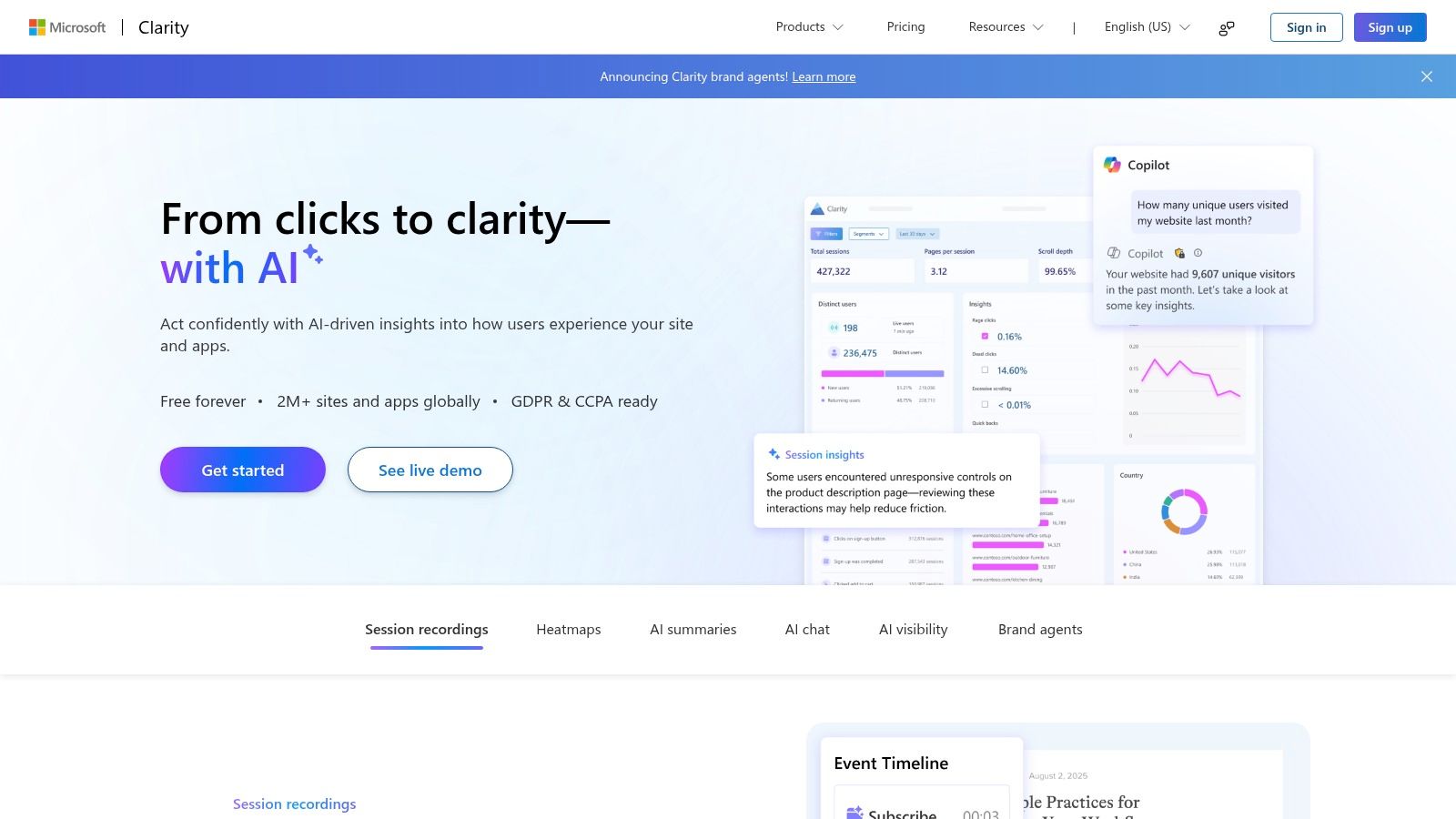
A small research budget shouldn't prevent a team from investigating its storefront. Microsoft Clarity is the practical starting point for behavior analysis without a software subscription.
It offers heatmaps and session recordings for digital experiences where it's installed. Use those observations to identify potential friction, then decide whether the problem warrants a fix, further research, or a controlled experiment.
Free software still needs an owner
Microsoft Clarity lists its service as free forever, with unlimited websites, heatmaps, and team members, no traffic limits or required paid upgrade, and GDPR- and CCPA-ready positioning. That positioning doesn't remove your organization's responsibility to assess consent, masking, and appropriate deployment.
Clarity doesn't run A/B tests. It also won't show interactions with Amazon listings where your team can't install it.
- Choose it for: Low-cost hypothesis building on an owned storefront.
- Don't use it for: Declaring that a proposed change will improve sales.
- Implementation priority: Configure it appropriately and assign someone to turn observations into decisions.
The hidden expense is staff time. Collecting recordings is easy; reviewing the right sessions and prioritizing a commercially meaningful response requires discipline.
Set a narrow research question before opening the dashboard. For example, investigate whether shoppers can find essential product information rather than browsing sessions without a defined problem.
Choose Clarity before buying advanced research software if basic behavior evidence will answer the current question. Upgrade only when a specific analytical requirement exceeds what the team can accomplish with the existing workflow.
10. Intelligems
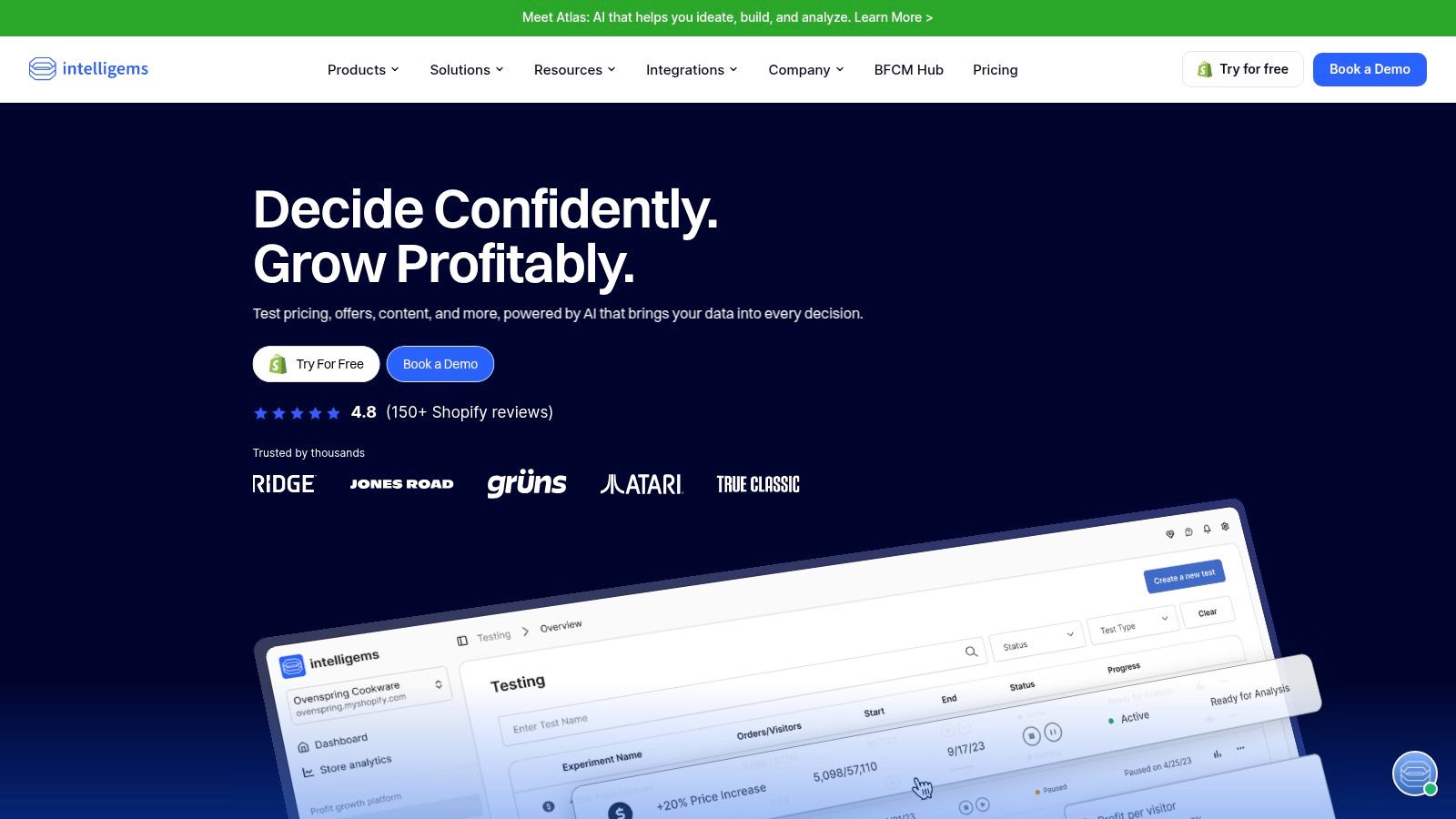
Intelligems is the strongest fit here for Shopify merchants testing pricing, offers, and shipping decisions. Those tests address commercial questions that heatmaps and preference surveys can't settle.
Its ecommerce experimentation capabilities also cover content and site design, with Shopify integration, a no-code visual editing path, and support for technical customization. It's designed for owned Shopify experiences, not Seller Central listing experiments.
Optimize profit, not order count
Intelligems lists a 14-day Core Plan trial, with pricing dependent on store order volume and the testing capabilities required. Confirm which tests and integrations your store needs before comparing plan costs.
The priority is measurement design. An offer can increase conversion while reducing the contribution earned from each visitor, so finance should help define the outcome before launch.
- Best first decision: Whether a pricing, offer, or shipping change improves commercial performance.
- Implementation requirement: Validate the storefront experience, technical integrations, and purchase reporting.
- Main limitation: Shopify specialization makes it unsuitable as a general marketplace experimentation tool.
Consider the unit of analysis explicitly. A visitor-level price test, an order-level report, and a product-level margin calculation describe different things, so reconcile them before declaring a winner.
Include relevant product costs, discounts, shipping economics, and acquisition costs in the business review. Revenue alone isn't enough.
Choose Intelligems when the unresolved question concerns Shopify economics. Don't copy a storefront result into Amazon pricing strategy without evaluating the separate marketplace context, customer journey, and profitability implications.
Best Conversion Rate Optimization Tools: Feature Comparison
| Tool | Primary Use | Amazon Relevance | Key Strength | Best Fit | Pricing |
|---|---|---|---|---|---|
| Amazon Manage Your Experiments | Amazon listing A/B tests | Direct; tests eligible detail-page content with shopper behavior | Measures sales and conversion; can publish winners | Brand-registered sellers with sufficient traffic | Included for eligible sellers; Professional account is $39.99/month plus fees |
| PickFu | Consumer preference polls | Indirect; gathers feedback on listing assets, not purchases | Targeted panels with written feedback | Pre-launch research or listings without enough traffic for live tests | From $1 per response; PickFu+ is $99/month |
| VWO | Website experimentation and optimization | No; tests owned websites | A/B and multivariate testing with visual editing | DTC teams building a testing program | Varies by product and usage |
| Optimizely Web Experimentation | Website experimentation and personalization | No; requires website implementation | Visual and code-based testing with targeting | Larger teams with complex experimentation needs | Custom quote |
| Convert Experiences | Website A/B testing and personalization | No; built for owned websites | Published plans, integrations, and free trial | DTC teams testing landing pages | Based on tested-user volume; 15-day trial |
| AB Tasty | Web and product experimentation | No; tests owned digital properties | Combines experimentation and personalization | Brands optimizing multiple digital touchpoints | Generally sales-led |
| Contentsquare | Website and app experience analytics | No; does not measure Amazon behavior | Heatmaps, replays, funnels, and surveys | Teams identifying friction and test ideas | Free plan up to 200,000 monthly sessions; advanced features may be paid |
| Hotjar | Website behavior research | No; does not provide controlled test results | Heatmaps, recordings, surveys, and feedback | DTC teams investigating site usability | Free Basic plan; Observe plans from $31/month |
| Microsoft Clarity | Website behavior analytics | No; does not run A/B tests | Free heatmaps and session recordings | Teams building hypotheses for DTC improvements | Free |
| Intelligems | Shopify experimentation | No; designed for Shopify stores | Tests pricing, offers, shipping, and site content | Shopify brands optimizing revenue and profit | Varies; 14-day Core Plan trial |
Match the Tool to the Decision You Need to Make
There's no universal winner among the best conversion rate optimization tools. Choose Amazon Manage Your Experiments for marketplace-native listing tests, PickFu for pre-launch or low-traffic feedback, and VWO, Optimizely, Convert, or AB Tasty for owned-site experimentation. Choose Contentsquare, Hotjar, or Clarity for behavioral research, and Intelligems for Shopify pricing and offer tests.
Before purchasing software, define the business outcome and the evidence required to change your decision. Purchase-based experiments, preference polls, and session recordings answer different questions, so don't combine them into a single confidence claim.
Define the commercial contract before launch
Agree on the primary outcome, traffic requirement, test duration, and profit impact. Minimum detectable effect means the smallest improvement worth reliably distinguishing, and that choice should reflect commercial value rather than a desire to declare a winner quickly.
Also define the unit of analysis and stopping rules. Don't treat an early uplift as proof, and don't keep a listing experiment running indefinitely when the available traffic can't support a useful conclusion.
- For low traffic: Use qualitative research and directional pre/post analysis to prioritize decisions, while acknowledging their limits.
- For live experiments: Keep audience assignment and event tracking consistent, and preserve historical results.
- For scaling: Confirm that the improvement supports profitable acquisition rather than merely increasing an intermediate metric.
For Amazon leaders, connect the test backlog with search-funnel evidence. Amazon's Search Query Performance dashboard provides query-level impressions, clicks, cart additions, and purchases across organic and Sponsored Products search activity, helping teams distinguish a visibility problem from a purchase-conversion problem.
Connect conversion decisions with media allocation
Full-funnel measurement matters because shoppers encounter different combinations of advertising before purchasing. In Amazon Ads' Poppi case study, Amazon DSP combined with Sponsored Products produced the highest conversion rate among the evaluated combinations; new-to-brand customers increased 16 times within six months.
That result isn't a forecast for another brand. It supports a practical recommendation: evaluate conversion alongside audience mix and media exposure, rather than assuming listing changes explain every movement.
Headline's position is that PPC should support profitability, organic growth, and sustainable scale. Treat listing content, conversion rate, and organic visibility as connected levers, without assuming every conversion improvement automatically raises organic rank.
Use Headline Marketing Agency to connect conversion insights with Amazon PPC, Search Query Performance, and Amazon Marketing Cloud analysis. The objective is better decisions across CTR, CVR, organic rank, profitability, and long-term brand equity, not a collection of isolated dashboard wins.
Headline Marketing Agency combines Amazon PPC and DSP management with content optimization and analysis using Search Query Performance and Amazon Marketing Cloud insights. Visit Headline Marketing Agency to discuss which listing experiments and advertising changes should take priority for your brand's profitability and sustainable growth.
Get Your Free Amazon PPC Audit
Discover untapped growth opportunities and see how our data-driven approach can improve your ROAS.
Get Free Audit →Ready to Transform Your Amazon PPC Performance?
Get a comprehensive audit of your Amazon PPC campaigns and discover untapped growth opportunities.