The 14 Best Amazon PPC Software Options for Brands in 2026
Amazon PPC software should save time and improve decisions. We review the 14 best platforms for 2026, including Scale Insights, Adbrew, and 12 more tools that actually deliver for agencies and brands.

For ambitious eCommerce leaders, Amazon PPC is no longer just an advertising channel. It's a primary lever for capturing market share, accelerating organic rank, and achieving sustainable profitability. The native Amazon Ads console is the starting line, but scaling requires more than its manual controls can offer. This creates a critical inflection point: which Amazon PPC software can transform raw ad data into a decisive competitive advantage?
This guide moves beyond generic feature lists to provide a performance-first analysis of the top 14 platforms. We’ll dissect each tool through the lens of a senior decision-maker, focusing on how it translates into tangible business outcomes. The goal is to select a partner that aligns with the modern imperative: using paid media to fuel lasting organic growth.
We'll cut through the marketing jargon to deliver an expert, no-nonsense assessment of each tool’s strengths, weaknesses, and ideal use case. You will find actionable breakdowns to help you evaluate which solution best fits your operational workflow and strategic goals, whether you’re building an in-house team or scaling with an agency partner. This is your blueprint for selecting software that doesn't just manage ads but actively drives total business growth.
1. Scale Insights
Scale Insights is purpose-built Amazon PPC automation software engineered by five Amazon FBA sellers with over $200M in combined revenue. The platform's core philosophy is giving advertisers granular, rule-based control over every aspect of their campaigns, from bid adjustments and dayparting to negative keyword harvesting and budget allocation, without sacrificing the automation needed to operate at scale. With 11 proprietary algorithms and over 200 customizable parameters, Scale Insights delivers what it calls "absurd control," enabling brands to stack multiple automation rules into sophisticated workflows that mirror their exact strategic intent.
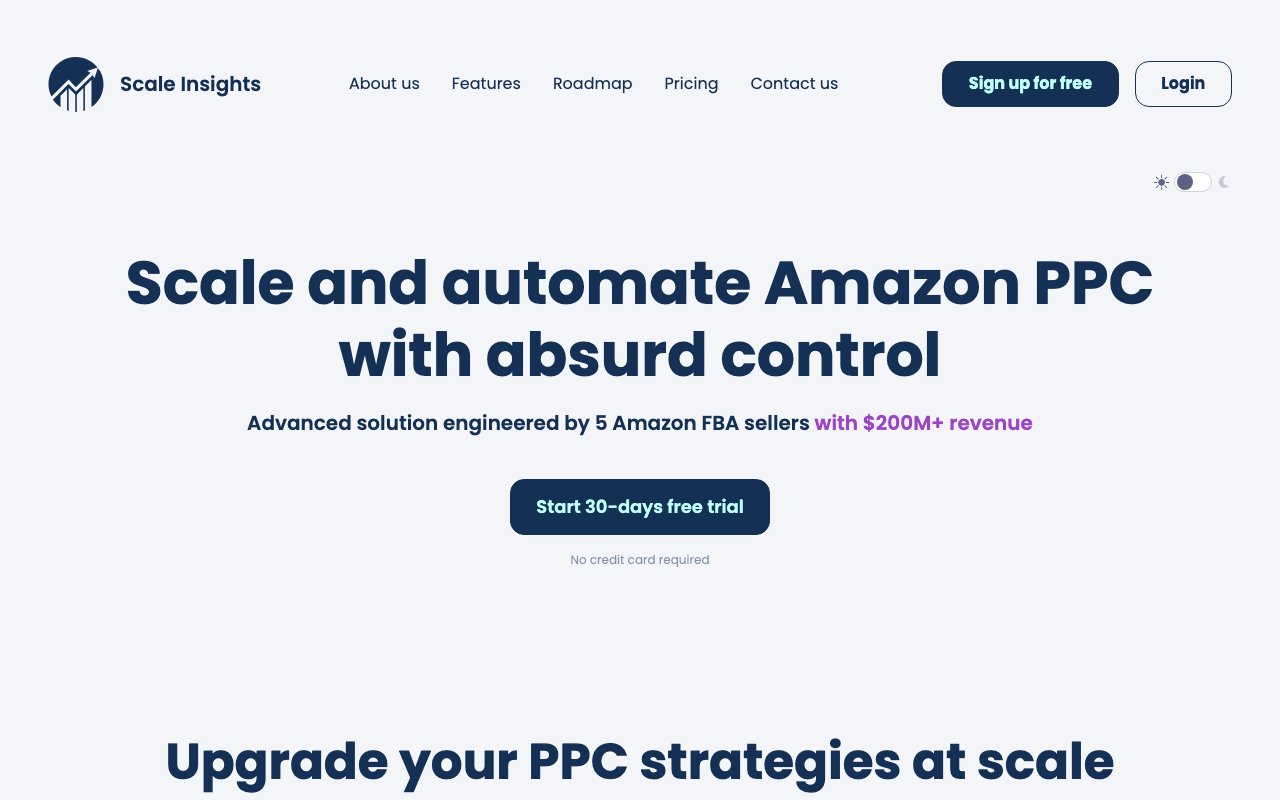
What sets Scale Insights apart is its transparency and flexibility. Before any automation fires, users can preview upcoming changes and review step-by-step algorithm computations, creating full visibility into why each decision is made. The platform supports Sponsored Products, Sponsored Brands, and Sponsored Display across 12 Amazon marketplaces globally. Its pricing model is uniquely seller-friendly: you pay only for the ASINs you actively automate, not your entire catalog, making it accessible for growing brands while scaling cost-efficiently for large portfolios.
Key Details & Performance Impact
- Best For: Amazon sellers and agencies who want deep, customizable automation with full transparency into every algorithmic decision.
- Pricing: Tiered plans from $78/month (5 automated ASINs) to $688/month (100 ASINs), with annual discounts of 20%. A 1% of ad spend plan is available for unlimited ASINs.
- Performance Insight: 11 algorithms with 200+ parameters enable highly tailored optimization strategies; template-based automation allows instant scaling across campaigns and ad groups.
- Strategic Limitation: Focused exclusively on Amazon Sponsored Ads; does not cover DSP or AMC. The depth of customization means a steeper learning curve for teams new to rule-based automation.
Website: https://scaleinsights.com
2. Adbrew
Adbrew is an AI-powered Amazon advertising platform that unifies Sponsored Ads, DSP, and Amazon Marketing Cloud (AMC) management into a single interface. The platform has earned 12 nominations and 3 wins at the Amazon Ads Partner Awards over three consecutive years, a distinction no other AdTech provider in the space can claim. Adbrew's approach combines rule-based automation with AI-driven intelligence, enabling brands and agencies to manage bids, budgets, placements, and targeting with both precision and scale.
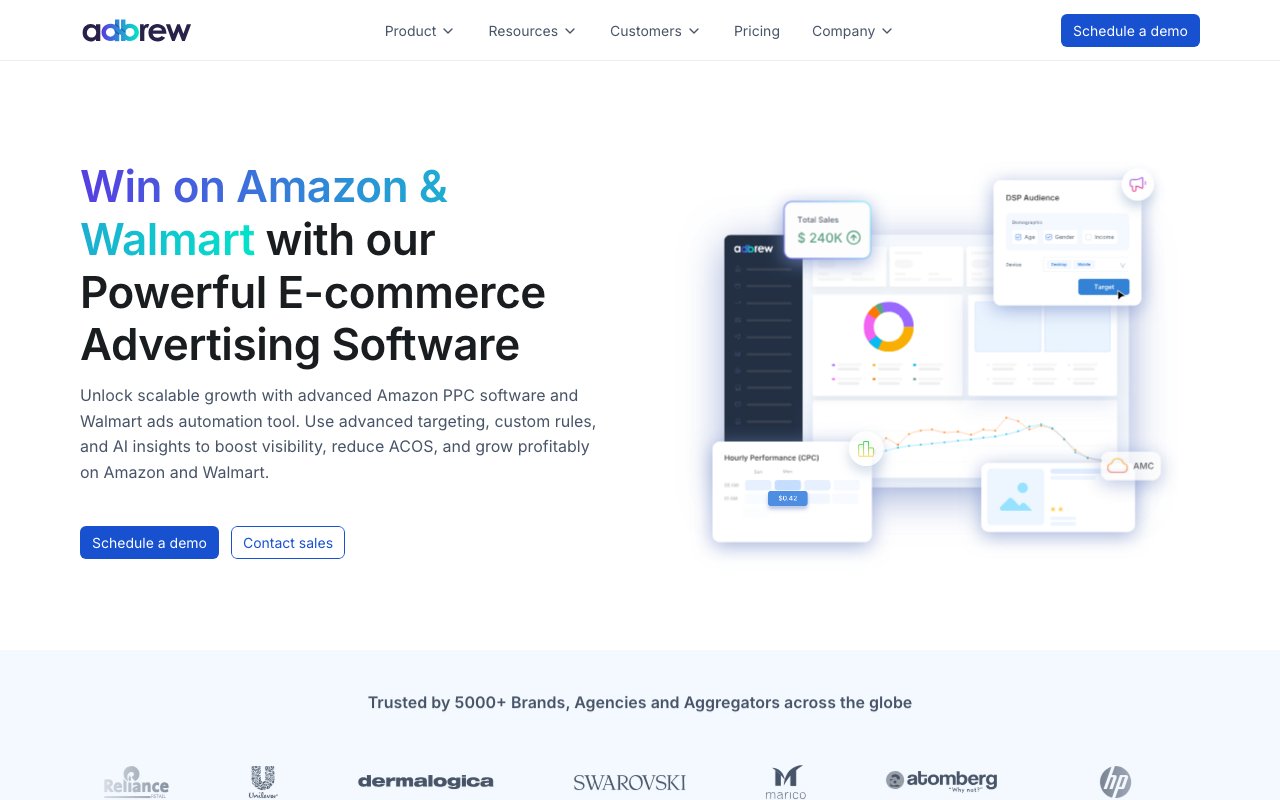
What makes Adbrew particularly compelling for growth-focused brands is its end-to-end coverage. Beyond standard Sponsored Ads optimization, the platform offers full Amazon DSP functionality without minimum spend requirements, a significant differentiator for mid-market brands looking to expand into programmatic without enterprise budgets. Its AMC integration delivers pre-built, no-code reports and custom audience building, turning complex data analysis into actionable campaign strategy. With over 5,000 customers globally, Adbrew has proven its ability to reduce wasted ad spend while scaling revenue across diverse account sizes.
Key Details & Performance Impact
- Best For: Brands and agencies seeking a unified platform covering Sponsored Ads, DSP, and AMC with strong AI-driven optimization and reporting.
- Pricing: Custom pricing based on account size and ad spend; contact Adbrew for specific tier details.
- Performance Insight: Case studies show 31.9% ACOS reduction within two months, 250+ hours saved monthly on manual optimization, and $1M+ incremental revenue lifts through AMC-powered audience strategies.
- Strategic Limitation: Pricing is not publicly listed, requiring a sales conversation. Best suited for brands ready to invest in a comprehensive platform rather than a lightweight point solution.
Website: https://www.adbrew.io
3. Amazon Ads (Advertising Console)
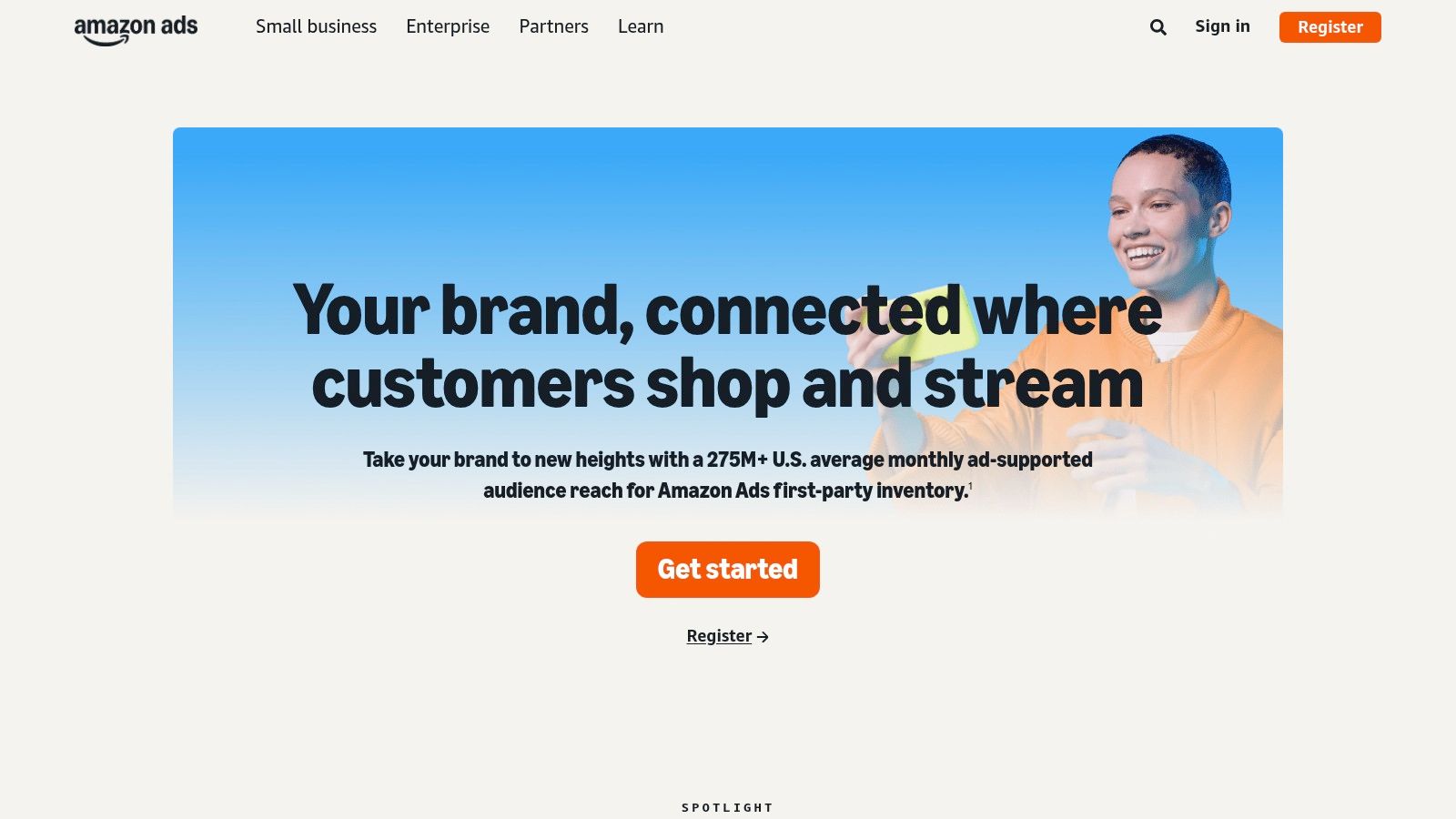
The Amazon Ads platform is the foundational, non-negotiable tool for every brand on the marketplace. It's the native environment where all PPC campaigns are built, managed, and measured. Before layering on any third-party Amazon PPC software, mastering its framework is essential, as all other tools are built upon its API. The console provides direct, unfiltered access to every ad format (Sponsored Products, Brands, and Display), ensuring you receive first access to new features and beta programs. Its primary advantage is its cost and data fidelity.
Key Details & Performance Impact
- Best For: New sellers, brands with small catalogs, and teams needing to understand the fundamentals before investing in automation.
- Pricing: Free to use; advertisers only pay for CPC ad spend.
- Performance Insight: Provides the most accurate, real-time data and immediate access to all of Amazon's latest ad products and betas without an extra fee.
- Strategic Limitation: Lacks advanced automation, bulk processing, and rule-based optimization, making it inefficient for managing large, complex accounts and reacting to market changes at speed.
Website: https://advertising.amazon.com
4. Perpetua
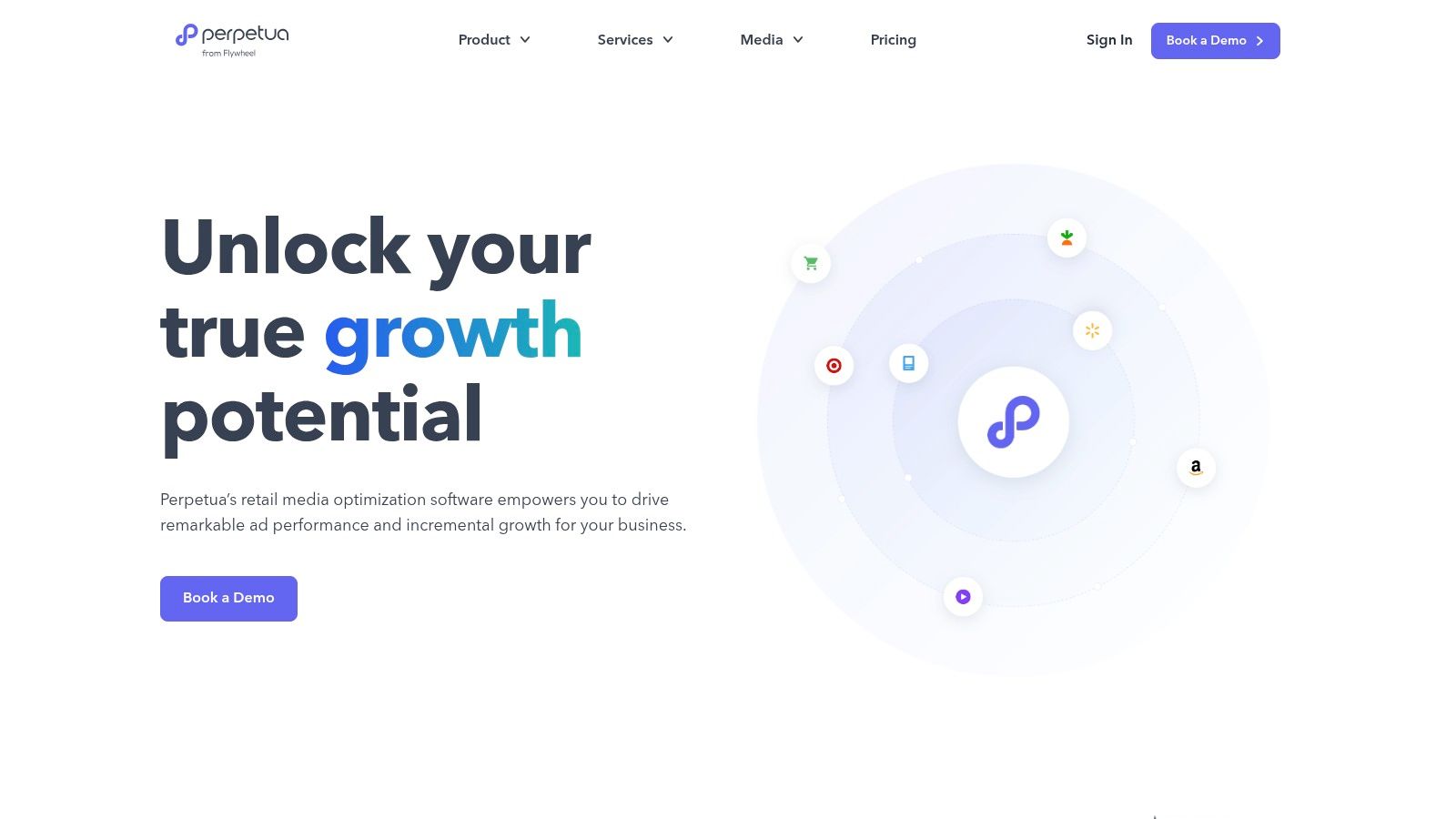
Perpetua is an AI-driven retail media platform designed for sophisticated advertisers focused on scaling. It moves beyond basic bid management to incorporate advanced, goal-based objectives like driving market share and achieving target organic rank. The platform’s core strength is its powerful automation engine, which leverages AI to manage bids, harvest keywords, and optimize campaigns toward strategic goals, making it a formidable contender in the Amazon PPC software space. It is particularly well-suited for mid-market to enterprise brands that require granular control and deep, actionable insights to win.
Key Details & Performance Impact
- Best For: Mid-market and enterprise brands with large catalogs seeking advanced, goal-based automation and competitive intelligence.
- Pricing: Starts at $250/month for the Standard tier, with advanced plans incorporating a percentage-of-ad-spend fee.
- Performance Insight: AI-powered bid optimization, hourly reporting via Amazon Marketing Stream, and excellent market intelligence features like share-of-voice tracking.
- Strategic Limitation: The entry-level price point is high for smaller brands, and the percentage-of-spend model on higher tiers can become costly for large advertisers without clear ROI tracking.
Website: https://perpetua.io
5. Teikametrics (Flywheel 2.0)
Teikametrics' Flywheel 2.0 is an AI-powered platform designed for brands selling on Amazon and Walmart. It distinguishes itself by focusing on goal-based bidding aligned with core business objectives like profitability or growth. This approach shifts the conversation from chasing a low ACoS to driving strategic outcomes, making it a powerful piece of Amazon PPC software for performance-focused leaders. The AI automates keyword harvesting and bidding by learning from historical data to maximize returns against your stated goals. The platform’s key advantage is its accessible upgrade path.
Key Details & Performance Impact
- Best For: Growth-focused brands that want a clear upgrade path from free analytics to full AI-powered automation and managed services.
- Pricing: Starts with a free tier for analytics; paid plans for automation are based on a percentage of monthly ad spend.
- Performance Insight: AI-driven, goal-based bidding and a unique inventory-aware optimization feature that automatically pauses ads for out-of-stock products to protect profitability.
- Strategic Limitation: The percentage-of-ad-spend fee structure on higher tiers can become very expensive for brands with significant ad budgets, requiring careful cost-benefit analysis.
Website: https://www.teikametrics.com/flywheel/
6. Pacvue
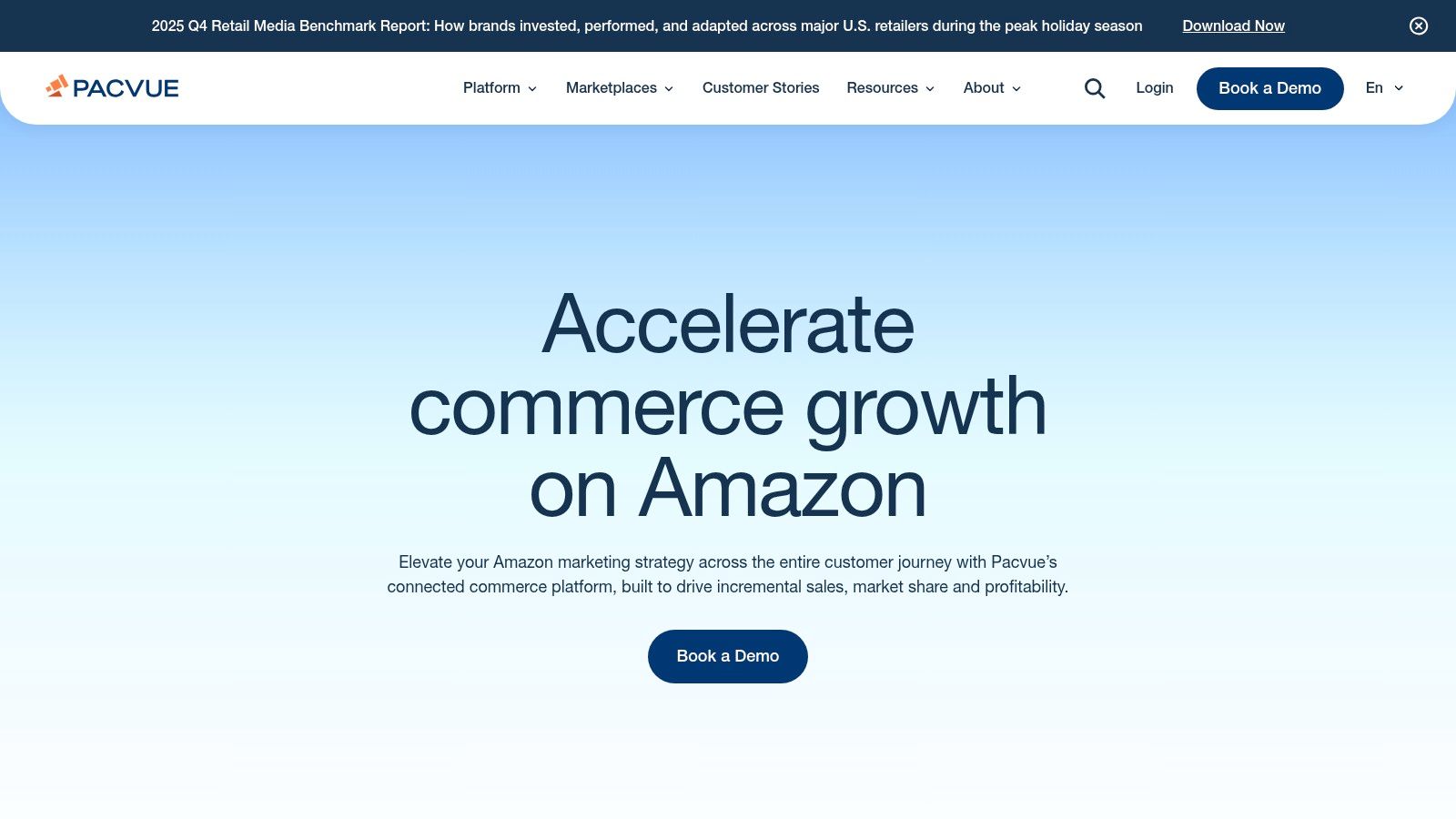
Pacvue is an enterprise-grade retail media platform built for large brands and agencies managing complex advertising portfolios across dozens of retailers. It moves beyond standard Amazon PPC software by integrating Sponsored Ads, Amazon DSP, and Amazon Marketing Cloud (AMC) into a single, cohesive command center. This unified approach provides a full-funnel view of performance, allowing sophisticated advertisers to connect upper-funnel brand-building efforts with lower-funnel conversion tactics for a complete picture of the customer journey. The platform's strength lies in its powerful rules-based automation, dayparting capabilities, and robust budgeting tools tailored for enterprise teams.
Key Details & Performance Impact
- Best For: Enterprise brands, large agencies, and sophisticated advertisers needing to manage both search and display (DSP) campaigns in one unified platform.
- Pricing: Quote-based enterprise pricing, typically based on a percentage of ad spend.
- Performance Insight: Offers true full-funnel management by integrating Sponsored Ads, DSP, and AMC, providing unparalleled visibility and control for large-scale operations.
- Strategic Limitation: High cost and a complex implementation process make it impractical for small to medium-sized businesses or those not leveraging Amazon DSP.
Website: https://pacvue.com/marketplaces/pacvue-for-amazon/
7. Skai (formerly Kenshoo)
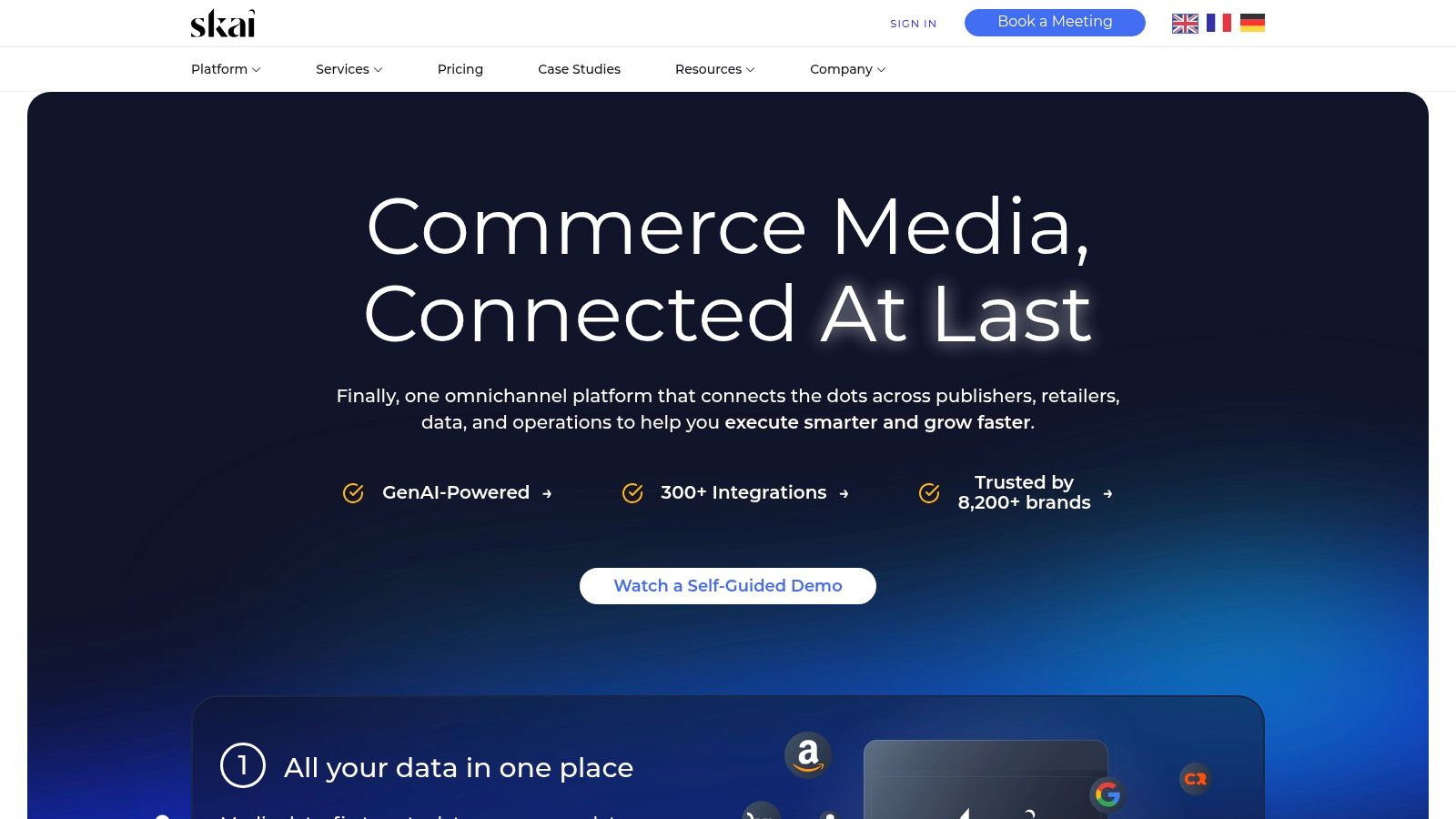
Skai is a comprehensive omnichannel marketing platform, not just an Amazon PPC software. It is engineered for enterprise marketers who need to manage Amazon advertising within the context of a broader digital strategy, including paid search, social media, and other retail channels. The platform unifies Sponsored Ads, Amazon DSP, and Amazon Marketing Cloud (AMC) insights, providing a holistic view of performance that isolated tools cannot. This makes it a powerful choice for large brands seeking to break down data silos and optimize their total advertising budget.
Key Details & Performance Impact
- Best For: Large enterprise brands and agencies managing multi-channel digital advertising who need to integrate Amazon into their overall strategy.
- Pricing: Enterprise-level pricing, typically a percentage of ad spend; requires a custom quote.
- Performance Insight: Unifies Amazon Ads (Sponsored Ads & DSP) with other major channels like search and social, offering a true omnichannel perspective and management hub.
- Strategic Limitation: The cost and complexity are prohibitive for businesses focused solely on Amazon, and the platform has a steep learning curve due to its extensive feature set.
Website: https://skai.io
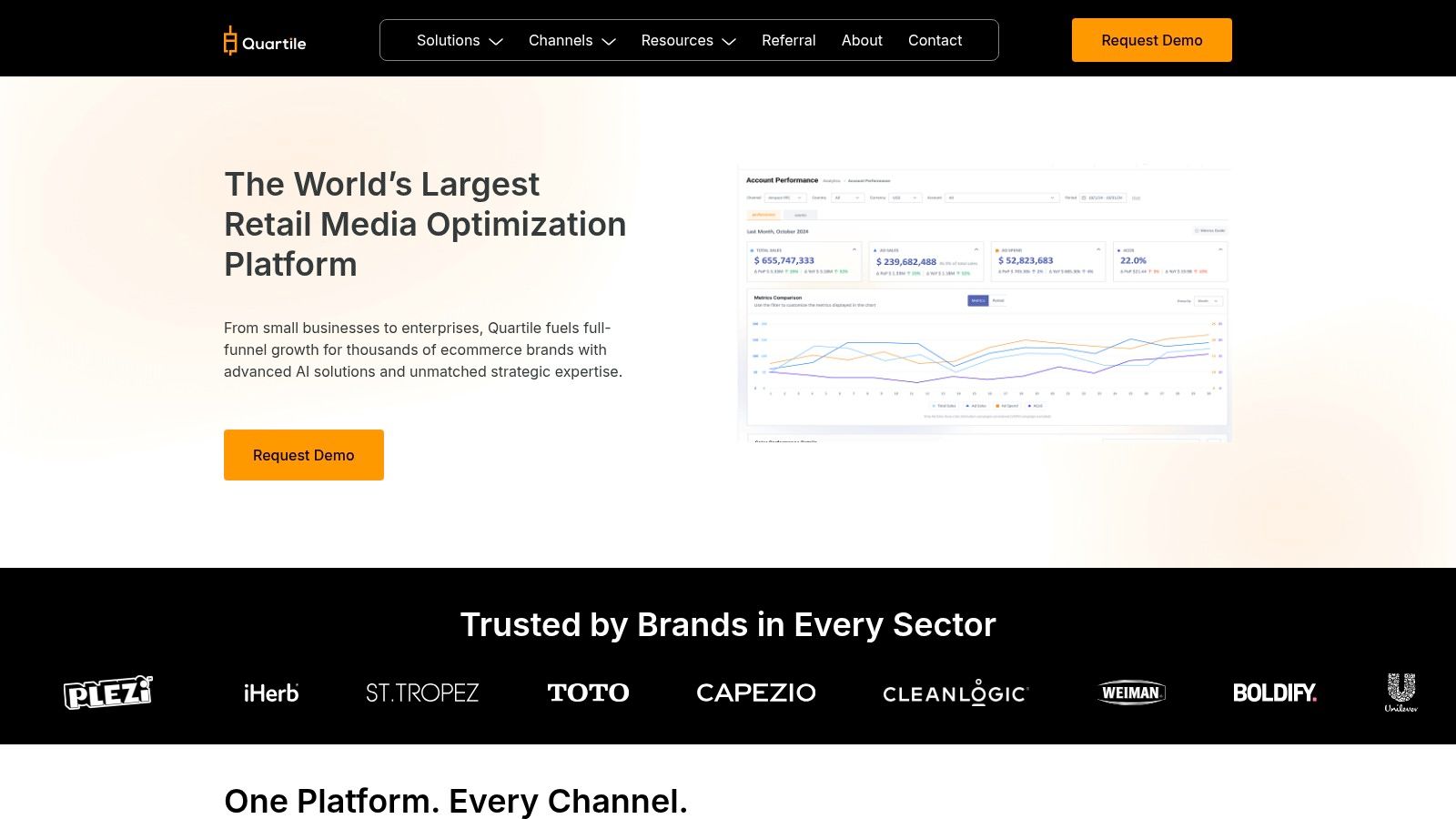
8. Quartile
Quartile is a powerful advertising optimization platform that leverages machine learning to automate campaign management across multiple marketplaces. It's designed for scale, making it a popular choice among large brands and agencies managing extensive product catalogs and significant ad spend (typically $10k+/month). The platform focuses on objective-based automation, allowing users to set goals like target ACOS or profitability, which the AI then works to achieve through automated bidding, keyword harvesting, and budget allocation. This makes it a strong contender for hands-off, goal-driven management. Quartile's key differentiator is its patented six-stage machine learning process that optimizes the entire product lifecycle on Amazon.
Key Details & Performance Impact
- Best For: Enterprise-level brands, large sellers, and agencies managing complex accounts with ad spend typically exceeding $10,000 per month.
- Pricing: Custom pricing based on ad spend; generally requires a long-term contract and is not publicly listed.
- Performance Insight: Sophisticated, goal-oriented AI that manages bidding and campaign structure at a scale difficult to achieve manually. Strong multi-channel and global marketplace support.
- Strategic Limitation: The platform's high cost and contract requirements make it inaccessible for smaller sellers. The AI-driven approach offers less granular, hands-on control compared to other tools.
Website: https://www.quartile.com
9. Intentwise
Intentwise is an advanced ad optimization platform built for data-driven brands and agencies seeking more than just automation. It excels by unifying Sponsored Ads, DSP, and retail analytics into a single, cohesive environment. The platform pairs sophisticated AI-powered bidding with a powerful recommendation engine, allowing users to not only automate campaign management but also understand the "why" behind performance shifts. This makes it a strong choice for leaders who demand transparent, data-backed control over their advertising strategy.
Key Details & Performance Impact
- Best For: Large brands and agencies that require deep analytics, cross-channel data unification (Sponsored Ads + DSP), and AMC capabilities.
- Pricing: Not publicly listed but reported to start around $500/month, scaling with ad spend.
- Performance Insight: Excellent data unification and diagnostic tools that provide a transparent, 360-degree view of performance across the entire Amazon advertising ecosystem.
- Strategic Limitation: The cost and complexity can be prohibitive for smaller sellers, and unlocking its most advanced features (like AMC dashboards) may require additional investment.
Website: https://www.intentwise.com
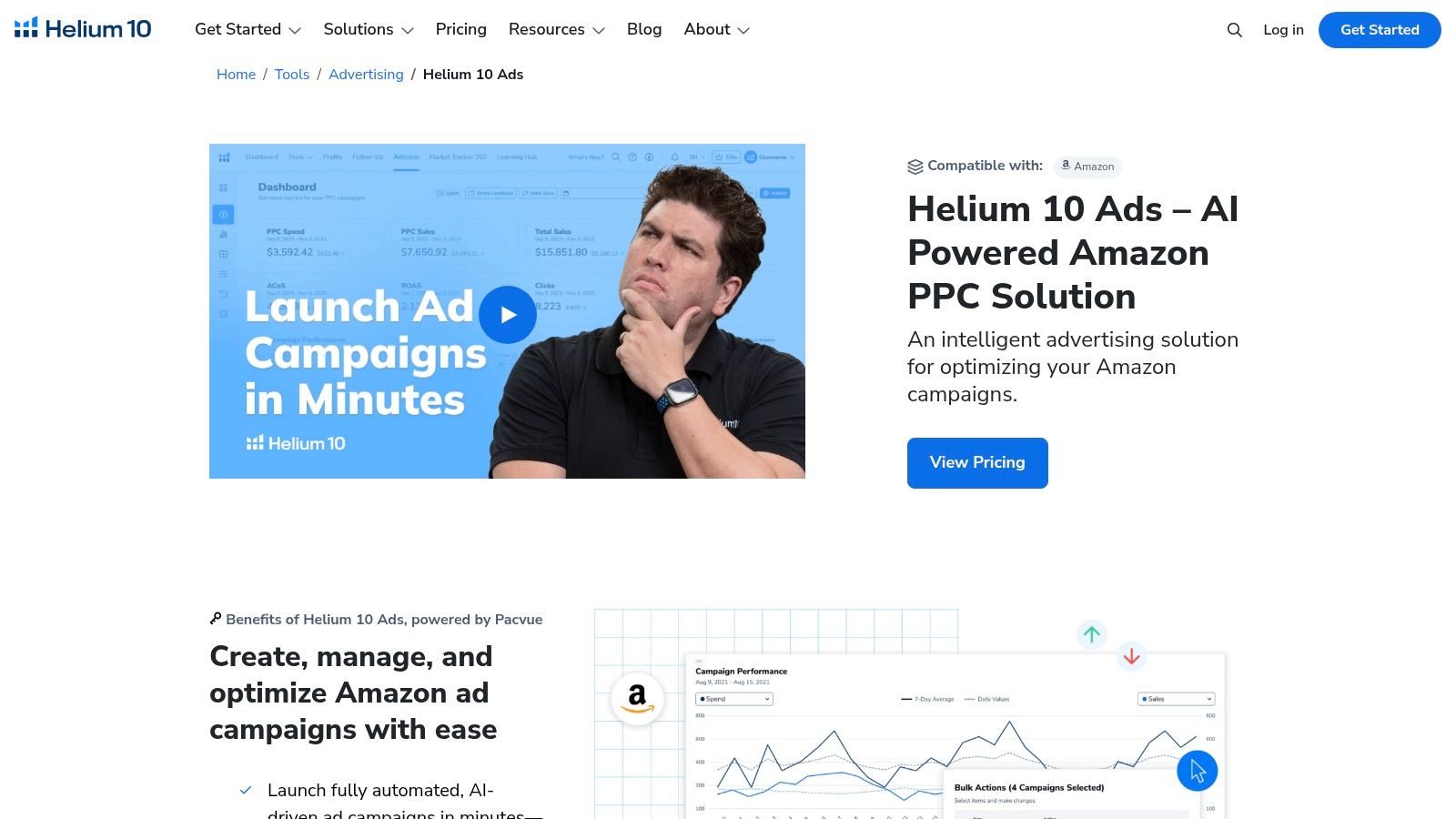
10. Helium 10 Adtomic
Helium 10 Adtomic is the advertising management module within the popular all-in-one suite of Amazon seller tools. Its biggest draw is the seamless integration with Helium 10’s other features, like keyword research (Cerebro) and listing optimization. This creates a cohesive workflow where insights from product research can be directly applied to advertising campaigns, making it an excellent choice for sellers who want a unified platform for their entire Amazon operation, not just a standalone piece of Amazon PPC software. Adtomic streamlines campaign creation with guided wizards and uses rule-based automation to manage bids and harvest keywords.
Key Details & Performance Impact
- Best For: Existing Helium 10 users and sellers who want an all-in-one tool for product research, listing optimization, and PPC automation.
- Pricing: Included in Helium 10's Diamond plan and above, starting at $229/month.
- Performance Insight: Excellent integration with Helium 10's powerful keyword and product research tools, creating a unified workflow from research to advertising.
- Strategic Limitation: Less customizable and powerful than enterprise-focused platforms; primarily supports Sponsored Ads without native DSP integration.
Website: https://www.helium10.com/tools/advertising/helium10ads/
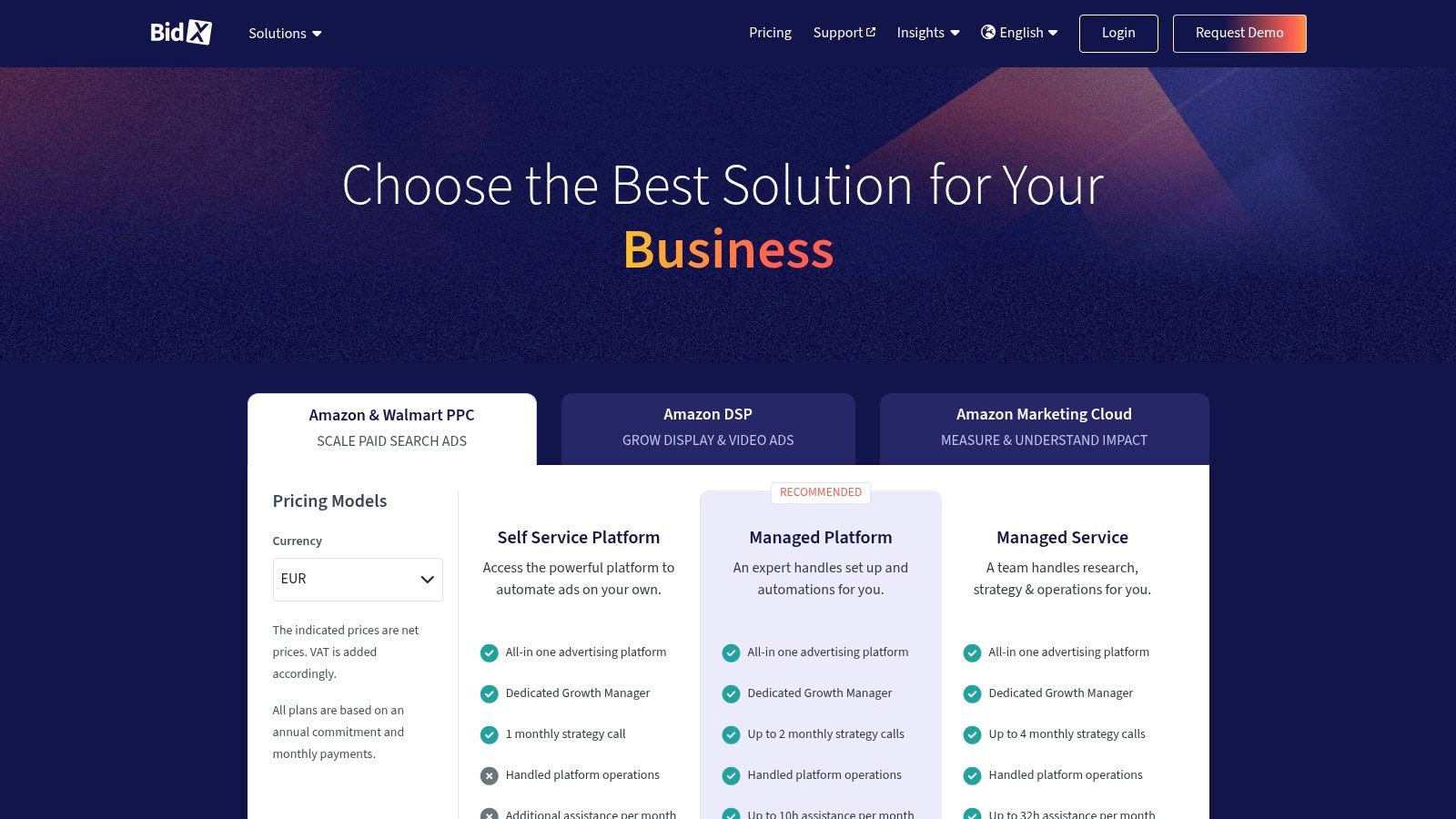
11. BidX
BidX is an advertising automation platform designed for sellers on Amazon and Walmart. It offers a robust suite of tools that cater to brands looking for either a self-serve software solution or a fully managed service. Its core functionality is built around rule-based automation, allowing users to create templated campaign structures, automate bid adjustments, and schedule ads with features like dayparting. This dual approach makes it a flexible option for businesses that may want to start with a managed service and later transition to managing their campaigns in-house using the same powerful software. The platform stands out with its granular control over automation rules and its strong reporting capabilities.
Key Details & Performance Impact
- Best For: Sellers and agencies seeking a flexible hybrid model that combines powerful self-serve automation with an optional managed service.
- Pricing: Custom pricing based on a monthly base fee plus a percentage of ad spend; published plans often require an annual commitment.
- Performance Insight: Offers both self-serve software and managed service options, providing flexibility as a brand's needs evolve. Its templated campaign creation and dayparting are standout features.
- Strategic Limitation: The pricing model, combining a base fee with a percentage of ad spend, can be more expensive for high-volume advertisers than flat-fee platforms.
Website: https://www.bidx.io/en/pricing
12. Sellozo
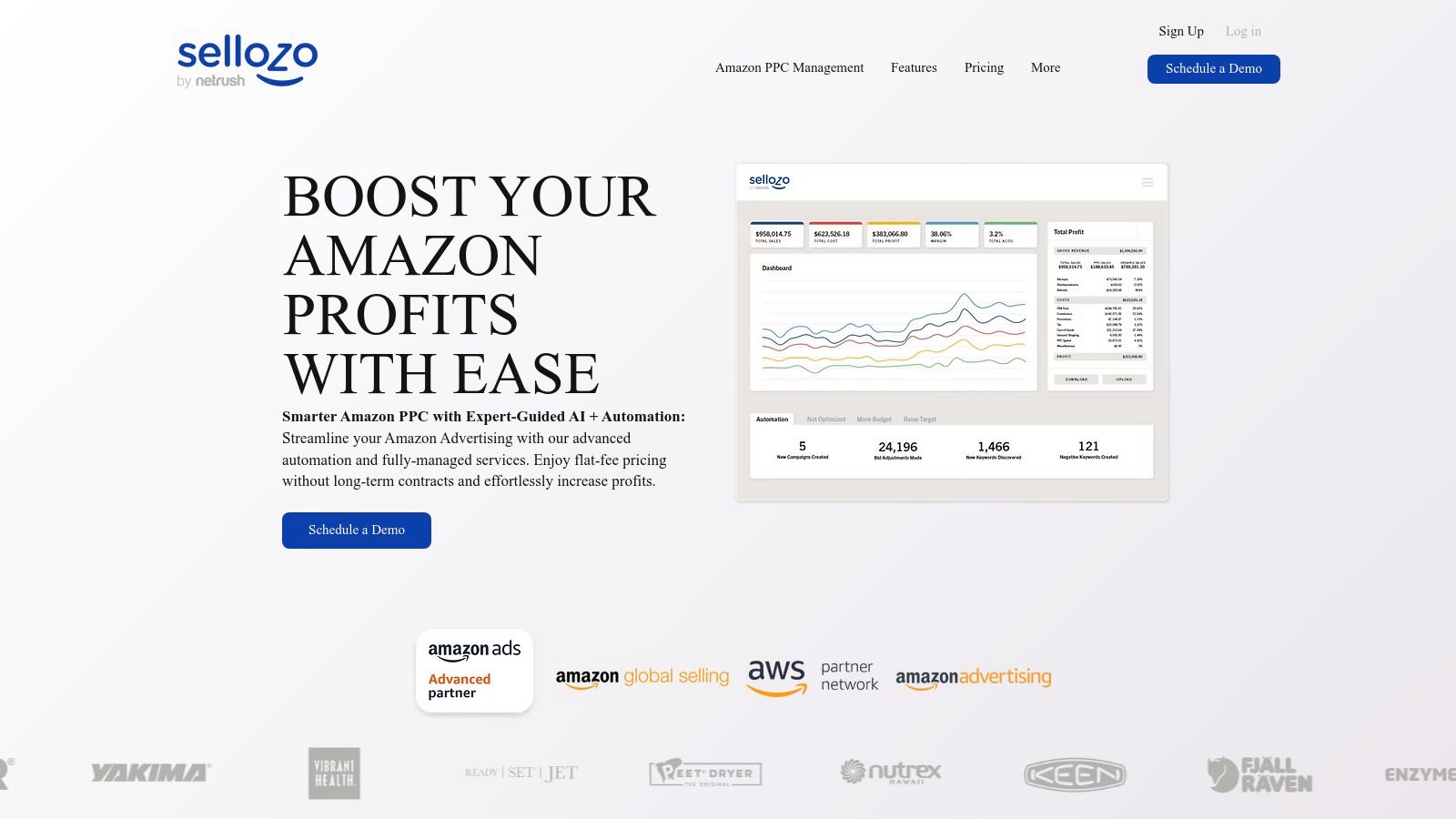
Sellozo stands out in the crowded Amazon PPC software space by offering a predictable flat-fee pricing model combined with a highly visual approach to campaign management. It's designed for advertisers who want powerful automation without the complexity of percentage-of-ad-spend fees, which can escalate unpredictably as a brand scales. The platform’s core features include AI-powered bid automation and keyword harvesting, but its main differentiator is the Campaign Studio, an intuitive drag-and-drop interface that allows users to map out their entire PPC strategy visually. Sellozo is a strong choice for brands that prioritize budget predictability and an intuitive user experience.
Key Details & Performance Impact
- Best For: Sellers and brands who prefer predictable, flat-fee pricing and a visual, intuitive interface for building and managing campaign structures.
- Pricing: Starts at a flat monthly fee based on the number of SKUs, not a percentage of ad spend.
- Performance Insight: The flat-fee pricing model provides cost certainty, and the visual Campaign Studio simplifies the process of creating complex PPC funnels.
- Strategic Limitation: The tool is heavily focused on PPC optimization and may lack the deep, enterprise-grade analytics and broader marketplace management features of higher-tier platforms.
Website: https://www.sellozo.com
13. m19
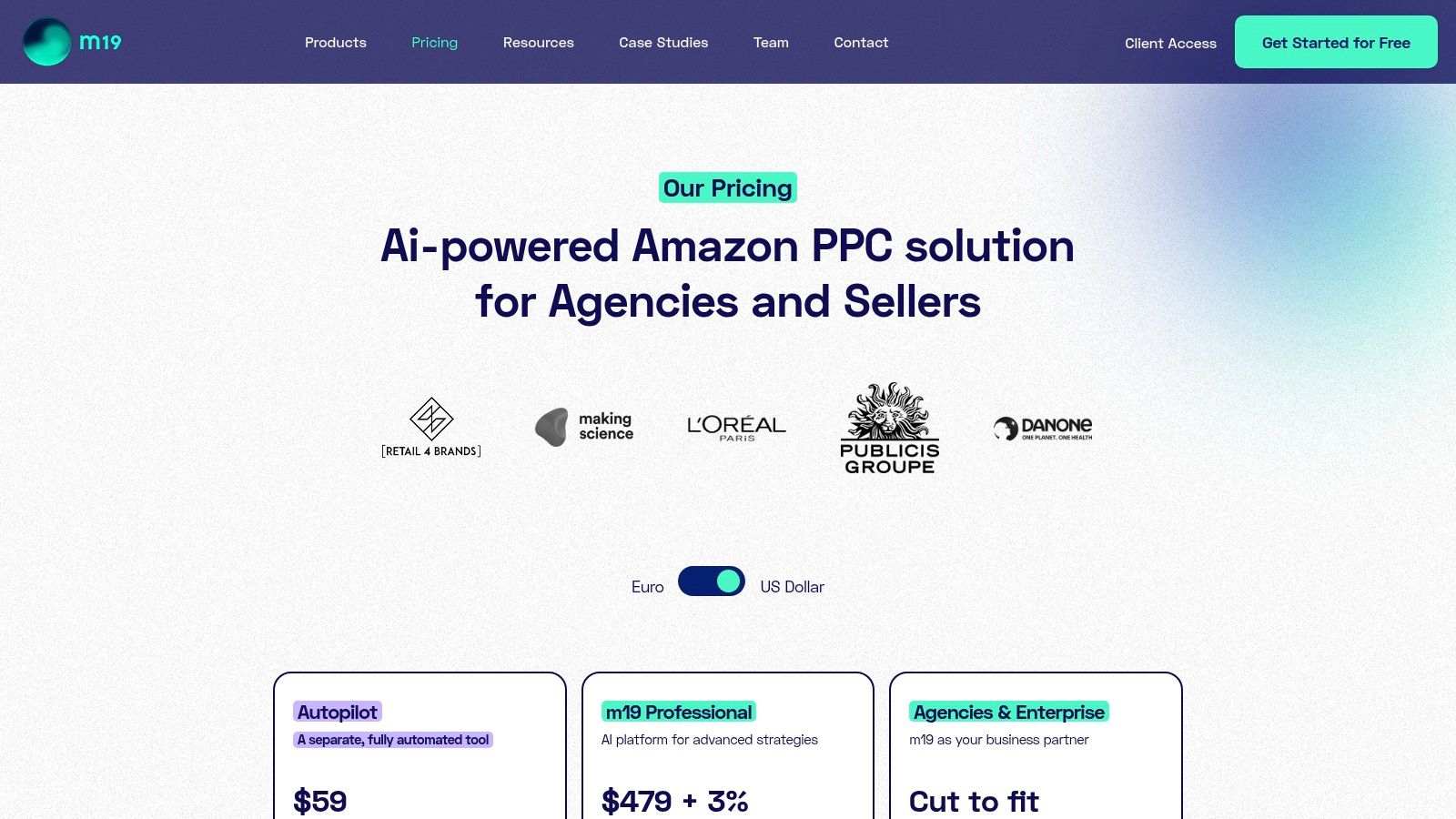
m19 offers an AI-driven approach to Amazon PPC automation with a focus on simplicity and accessibility. It's designed for sellers who want to leverage sophisticated advertising technology without a steep learning curve or high initial investment. The platform's core offering is its "Autopilot" feature, which fully automates campaign creation, keyword harvesting, and bid adjustments, making it a low-friction entry point for brands testing out hands-off management. This positions it as a practical choice for those looking to save time on campaign setup and daily optimization.
Key Details & Performance Impact
- Best For: Sellers new to automation, brands with smaller catalogs, or advertisers looking for a simple, set-and-forget solution for Sponsored Products.
- Pricing: Starts with a fixed monthly fee for the Autopilot tier, with a 30-day free trial. The Professional tier adds a percentage-of-ad-spend fee.
- Performance Insight: An accessible and affordable Autopilot feature for Sponsored Products, combined with transparent entry-level pricing and advanced features like dayparting.
- Strategic Limitation: The fully automated Autopilot tier only supports Sponsored Products, requiring an upgrade to the Professional plan for more comprehensive ad type management.
Website: https://www.m19.com/pricing-automated-ppc-campaigns
14. Zon.Tools
Zon.Tools positions itself as a highly accessible and budget-friendly Amazon PPC software, designed for sellers looking to implement rule-based automation without a significant financial commitment. It stands out with a collection of proprietary automation engines, such as "Keyword Recycler" and "Bid Gambler," which are engineered to continuously harvest converting search terms and optimize bids based on performance rules. This approach aims to provide a set-it-and-forget-it framework for repetitive PPC tasks. The primary appeal of Zon.Tools lies in its straightforward, low-cost pricing and month-to-month flexibility.
Key Details & Performance Impact
- Best For: Sellers on a tight budget, new advertisers exploring rule-based automation, or those with smaller catalogs who need basic, cost-effective optimization.
- Pricing: Low-cost monthly plans based on ad spend, with a very cheap 30-day trial often available.
- Performance Insight: Extremely affordable entry point for PPC automation with unique, proprietary rule sets that simplify keyword harvesting and bid adjustments.
- Strategic Limitation: The analytics suite is less robust than competitor platforms, and the DIY nature requires users to invest time in learning and fine-tuning the automation rules for optimal performance.
Website: https://www.zon.tools/pricing
Amazon PPC: 14-Tool Feature Comparison
| Platform | Core features | Target audience | Price & billing | Key strengths | Main limitations |
|---|---|---|---|---|---|
| Scale Insights | 11 algorithms; 200+ params; rule-based automation; dayparting; mass campaigns | Sellers; agencies; FBA brands at scale | $78-$688/mo (per ASIN); 1% spend unlimited | Deepest rule customization; full automation transparency; pay-per-ASIN | Sponsored Ads only (no DSP/AMC); steeper learning curve |
| Adbrew | AI automation; Sponsored Ads + DSP + AMC; no-code AMC reports; custom audiences | Brands; agencies; aggregators | Custom pricing based on account size | 3x Amazon Ads Partner Award winner; DSP no minimum; full AMC integration | Pricing not public; comprehensive platform investment |
| Amazon Ads (Advertising Console) | Native Sponsored Products/Brands/Display; Campaign Manager; APIs (DSP/AMC) | All advertisers; in-house teams | No platform fee; pay CPC ad spend | Best data fidelity; immediate beta access | Manual workflows; limited automation; steep learning curve |
| Perpetua | AI bid optimization; hourly reporting; SOV insights; AMC support | Mid-market to enterprise advertisers | Higher entry price; Growth+ uses % of spend | Strong automation, SOV analytics & enablement resources | Costly for smaller brands; percent fees at higher tiers |
| Teikametrics (Flywheel) | Goal-based campaign creation; AI bidding; inventory-aware optimization | SMBs to enterprise; brands needing managed services | Clear pricing tiers; free analytics tier; % fees at higher levels | Clear scale path; managed services option | %-of-spend can grow expensive; advanced features on higher plans |
| Pacvue | Rules/AI automation; DSP + AMC management; budgeting & workflows | Large enterprise catalogs/portfolios | Quote-based enterprise pricing | Full-funnel Search + DSP + AMC in one suite; strong governance | Enterprise cost and implementation; sales-led onboarding |
| Skai (formerly Kenshoo) | Omnichannel DSP & Sponsored Ads; creative analytics; AMC integration | Enterprise marketers unifying channels | Enterprise pricing | Unifies Amazon with broader search/social/retail channels | Overkill for Amazon-only teams; complex setup |
| Quartile | Objective-based automation; cross-channel support; global markets | Large catalogs, agencies, enterprise | No public pricing; often long-term contracts | Scales automation globally; agency-friendly | Opaque pricing; inefficient under ~$10k/mo spend |
| Intentwise | AI bidding + rules; diagnostic assistant (Wizi); AMC/DSP optimizer; mobile app | Brands/agencies wanting automation + diagnostics | Pricing not fully public; guides cite ~$500+ entry | Strong data transparency and diagnostics | Cost and need for professional services for advanced builds |
| Helium 10 Adtomic | Rules automation; campaign wizards; integrated with research suite | Sellers using Helium 10; SMBs | Clear self-serve tiers; bundled subscription value | Great bundle with product research & listing tools | No native DSP; less depth than enterprise platforms |
| BidX | Granular bid/budget controls; dayparting; templated campaign creators; managed option | Advertisers wanting flexible self-serve or managed (EU vendor) | Annual commitments; base fee + % of ad spend | Flexible self-serve or managed options; templated setup | Requires annual commitment; percent fees apply |
| Sellozo | AI bid automation; drag-and-drop Campaign Studio; optional managed service | Advertisers preferring flat-fee and intuitive UI | Flat-fee pricing; managed services optional | Predictable flat fees; easy onboarding | PPC-centric; lighter enterprise analytics; limited DSP support |
| m19 | Autopilot campaign setup; hourly data; dayparting; Pro analytics tier | Small sellers to higher-spend advertisers testing automation | Transparent entry pricing; 30-day trial; Pro adds % fees | Low-friction automated Autopilot; transparent trial | Autopilot limited to Sponsored Products; Pro tier fees |
| Zon.Tools | Proprietary automation rules; continuous bid/term optimization; month-to-month plans | Lean teams and new sellers | Very low monthly cost; $1 for 30-day trial | Extremely low cost and flexible trials; unlimited campaigns at tiers | Lighter analytics; DIY orientation; no native DSP/AMC |
Your Next Move: Integrating Software with Strategy for True Scale
Selecting the right Amazon PPC software is a strategic decision, not a technical one. We’ve evaluated a dozen platforms, each with distinct strengths. The core takeaway isn't that one tool is definitively "best," but that the optimal tool aligns with your brand's specific stage, goals, and internal resources. For eCommerce leaders, the common pitfall is viewing this as a software purchase. In reality, it's an investment in your brand's capacity to scale profitably on Amazon.
The right platform acts as a force multiplier, automating thousands of tactical decisions so your team can focus on high-level strategy. It’s the engine, but you still need a skilled driver to navigate the market.
From Automation to Intelligence: Choosing a Growth Partner
The journey from a few thousand dollars in monthly ad spend to six or seven figures requires a fundamental shift in your toolkit and thinking.
For Emerging & Growing Brands: If you're managing a smaller catalog, tools like Scale Insights, Sellozo, Helium 10 Adtomic, or m19 offer a fantastic entry point. Their strength is efficiency: automating keyword harvesting and bid adjustments to free up valuable time. Here, the primary ROI is time savings and establishing a baseline of performance.
For Scaled & Enterprise Brands: As ad spend becomes a significant line item on your P&L, your needs evolve from simple automation to sophisticated control and intelligence. Platforms like Adbrew, Pacvue, Perpetua, and Intentwise are built for this complexity. They offer multi-marketplace management, advanced rules-based automation, and full-funnel analytics. The focus shifts to optimization at scale, where incremental gains of 1-2% translate into substantial revenue and market share.
However, even the most advanced software has a critical limitation: it executes the strategy you provide. A tool can hit a 25% ACOS target with ruthless efficiency, but it can't tell you if that target is suffocating your organic rank, sacrificing market share, or ignoring crucial profitability metrics.
The Missing Layer: Human Strategy and Holistic Growth
This is where the most successful brands create their advantage. They don't just "set and forget" their software. They overlay its powerful automation with a nuanced, human-led strategy that connects PPC performance to the overall P&L. This means looking beyond ACOS and ROAS to understand the full impact of your ad spend on Total Advertising Cost of Sale (TACOS) and organic sales velocity.
A strategic partner can answer the bigger questions that software alone cannot:
- How are our ad campaigns influencing organic rank for our most important keywords?
- Are we bidding to maximize profitability on mature products while aggressively pursuing market share for new launches?
- How can we leverage advanced analytics from sources like Amazon Marketing Cloud (AMC) to build a truly comprehensive picture of the customer journey and inform our new product development?
Ultimately, the goal isn't just to automate your Amazon PPC; it's to build a resilient, profitable, and defensible brand. The right Amazon PPC software is an indispensable part of that equation. But pairing that technology with expert strategic oversight is what transforms your advertising from a cost center into a powerful engine for sustainable growth.
Takeaway: Best-in-class technology requires a profit-focused strategy to drive real growth. Headline Marketing Agency leverages the most powerful Amazon PPC software and overlays it with deep, data-driven expertise to help ambitious brands scale profitably. Let's discuss how we can build a comprehensive advertising strategy for you.
Get Your Free Amazon PPC Audit
Discover untapped growth opportunities and see how our data-driven approach can improve your ROAS.
Get Free Audit →Ready to Transform Your Amazon PPC Performance?
Get a comprehensive audit of your Amazon PPC campaigns and discover untapped growth opportunities.